
Newton homeowners looking for hardwood floor refinishing or restoration can request a free quote from Boston Hardwood Refinishing. Newton’s housing stock runs from 1880s Victorians to post-war ranches, and the floor underneath tells you a lot about what a refinish will involve. This page covers what we typically see in Newton homes and what to mention when you ask for a quote.
Prefer to talk it through? Call (857) 837-1234.
Why Newton homeowners refinish
Common reasons Newton homeowners call: original oak that has been carpeted for decades and is finally being uncovered, a kitchen or addition that never quite matched the rest of the house, worn finish in front halls and stairs from years of family traffic, and getting a house ready to sell in a competitive market. If your finish is intact and only dull, a maintenance coat may be enough. See the recoat vs refinish guide first.
Homes in Newton
Newton is a city of villages: Newton Centre, West Newton, Newtonville, Auburndale, Waban, Chestnut Hill, Newton Highlands, Newton Upper and Lower Falls, Nonantum, Oak Hill and Newton Corner each have their own mix of houses. Much of the city is single-family: late-Victorian and Queen Anne homes near the old rail stops, Colonial Revival and Tudor-style houses from the 1910s–1930s, and capes, ranches and split-levels built after World War II in neighborhoods like Oak Hill.
- Victorian & Queen Anne homes
- 1910s–1930s colonials & Tudors
- Post-war capes, ranches & split-levels
- Additions & renovated kitchens
Newton housing age by the numbers
According to the U.S. Census Bureau’s American Community Survey (2020–2024 5-year estimates), Newton has about 33,959 housing units. Roughly 49% were built in 1939 or earlier and about 67% before 1960.
About two-thirds of Newton’s homes were built before 1960, which is why so many houses have solid oak strip, sometimes under carpet, plus later additions that may not match the original floor.
Source: U.S. Census Bureau, ACS 5-year estimates, table B25034 (Year Structure Built), via Census Reporter and data.census.gov. Figures are estimates with margins of error. Lead-safe work rules for homes built before 1978: EPA RRP program.
Newton village notes for floors
Several of Newton’s villages took shape around a railroad stop or, along the Charles River, a mill, so the age and size of the houses shift from one village to the next. What that tends to mean for the floors, village by village:
- Newton Centre and Newton Highlands: large single-family houses from the late 1800s through the 1930s on the streets around the Green Line stops and Centre Street. Oak covers the main floors, and a front stair with a landing plus a long upstairs hall is part of most whole-house projects.
- Newtonville and West Newton: Victorians along and off Washington Street sit near two-family houses and a few newer condo buildings close to the village centers. In a two-family, say which unit and which floor the work is on, and whether a shared front hall or stair is included.
- Auburndale and Newton Lower Falls: Victorian and early-1900s houses on the western side of the city. Main rooms are usually oak, while kitchens, back halls and top-floor rooms in the oldest houses can turn out to be softwood or painted boards.
- Newton Upper Falls: a former mill village by the Charles, with modest older houses next to larger ones. Narrow rooms and floors patched across many decades are common, so expect some board-by-board repair before sanding.
- Waban and Chestnut Hill: mostly spacious single-family homes, many of them Colonial Revival or Tudor-style houses from the early 20th century. Projects here often span two or three floors and more than one staircase.
- Oak Hill and the southern edge of the city: post-war capes, ranches and split-levels. Oak under carpet is the usual find, and split-levels add several short stair runs between levels.
- Nonantum and Newton Corner: denser streets with more two- and multi-family houses, plus apartment buildings near the Mass Pike. Owners often refinish one unit while the other stays lived in.
Floors common in Newton homes
- Red and white oak strip flooring (often 2¼”) in early-20th-century colonials. It usually sands and refinishes well if earlier sandings left enough wood above the tongue.
- Borders and inlays in some older Victorians and colonials. Contrasting species around the room perimeter need careful sanding and finish choices so the pattern stays crisp.
- Oak hidden under wall-to-wall carpet in many post-war homes. Tack strips, staples and pad residue get pulled and filled before sanding.
- Mismatched additions: newer oak or engineered flooring next to the original. Engineered floors have a limited wear layer, so tell us if you know what was installed.
- Fir or pine in service spaces: back stairs, old pantries and third-floor rooms in the oldest houses may be softwood rather than oak. It dents more easily and sands differently; the fir and pine floor guide explains what to expect.
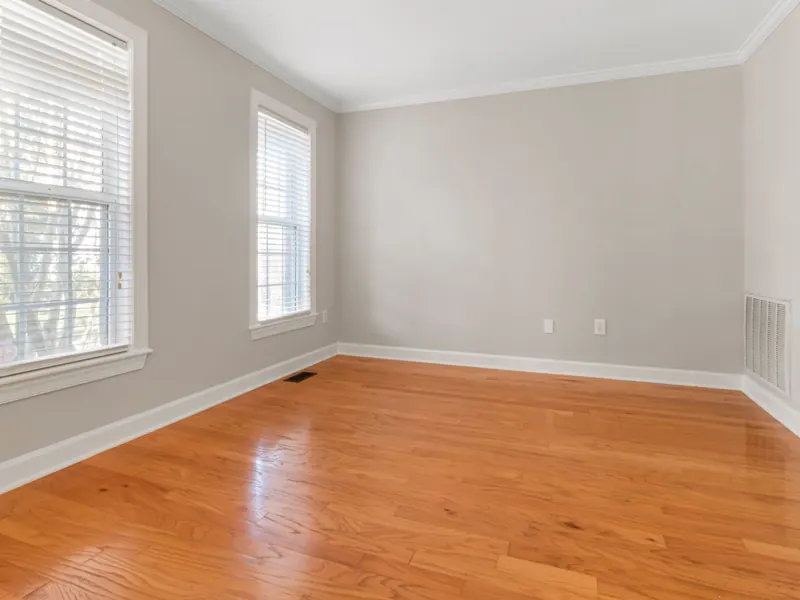
Hardwood floor restoration in older Newton houses
Many Newton owners describe the job as restoring the floor rather than refinishing it, especially in a Victorian or an early colonial where the original oak is still in place. The words overlap. In practice, restoring an old floor means keeping the boards that are already there and bringing them back in a set order: repairs first, then sanding to fresh wood, then color and new protective coats. It is not the same as tearing the floor out and installing a new one.
- Find out how much wood is left. A floor that has been sanded several times can still look solid from above. The board-thickness check described in the planning section below decides whether a full sand is sensible or whether some rooms need a lighter approach or new boards.
- Repair before sanding. Loose or squeaky boards are refastened. Boards that are split, black-stained from a long leak or pet damage, or missing where a radiator, wall or chimney came out are cut out, and new boards are laced in with their end joints offset, the way the original floor was laid. The water and pet damage guide explains how those boards are judged.
- Keep borders and inlays readable. A contrasting border around a dining room or front parlor is worth protecting. Missing or lifted pieces get reset before sanding, and the border is sanded with care so its edges stay sharp; the parquet and pattern floor page covers feature strips in more detail.
- Remove the old coatings evenly. Very old floors can carry layers of varnish, shellac or wax under more recent finish. Wax in particular has to come off fully, or a new finish may not bond.
- Choose the look on the real floor. Some owners want the warm natural tone of old oak back; others want a new color. Stain samples on the sanded boards are the reliable way to decide, and the finish and sheen guide explains how the clear coat shifts the final color.
What restoration can and cannot do
Sanding takes wood off; it never adds any back, so a floor that has been worn down to its nails or tongues needs those boards replaced rather than restored. Deep black stains usually go through the board, so they need replacement too. A repaired area blends in once the room is sanded and finished together, but a close look may still show where new wood meets old, particularly where species or cut differ. If the existing finish is intact and only dull, none of this may be needed: a screen and recoat renews the surface without sanding. Oak that has just come out from under carpet often needs repairs at the tack-strip line and the doorways first; the under-carpet guide walks through what to look for.
For a restoration quote, a few extra photos help: a floor register or heat vent with its cover lifted (it shows the board edge), any area of patched or mismatched boards, the corners of a border, and close-ups of dark stains.
Planning a refinish in a Newton house
Most Newton projects are whole-house or whole-floor jobs in occupied single-family homes, so planning is mostly about where the household goes while the floors are worked on. Sanding is loud and the finish needs time to cure, so many families plan the work for a vacation week, or do the second floor while living downstairs and then switch. Kitchens and front halls take the hardest wear. If those connect to rooms you aren’t refinishing, decide early where the job should stop so the transition lands at a doorway or threshold.
Older Newton houses have often been sanded several times already. Before quoting a full sand, it helps to check board thickness at a floor register or a removed threshold. Strip oak that has been sanded too often shows exposed nails or tongue edges, and those spots may need board replacement instead of another heavy cut. Large open rooms in newer additions and renovated kitchens also show stain lap marks and sheen differences more than small rooms do, so finish choice and application order matter more there.
Seasonal humidity matters in Newton, as it does across Greater Boston. Oak shrinks in dry heated winters and swells in humid summers, so seasonal gaps between boards are normal and usually not worth filling. Running heat or air conditioning normally during the work helps the finish cure evenly.
Stairs deserve their own mention. Many Newton colonials have an oak front stair with painted risers and a painted or stained handrail, and a back stair that is more utilitarian. Treads are sanded mostly by hand and with detail tools, so they take more time per square foot than open floor. Decide early whether you want the stair to match the new floor color, and whether the risers and skirt boards should be repainted afterward.
Several floors and stairs in a larger Newton house
Many Newton houses have three finished levels above a basement, and the main staircase is often the only route between them. That shapes the order of the work more than the square footage does. A common sequence starts on the top floor and works down, leaving the front stair and entry hall for last so nobody is stranded upstairs while a coat cures. A house with a back stair gives more room to plan, because one stair can stay in use while the other is being finished.
Second-floor halls and landings usually run straight into the bedrooms around them, so doing the hall together with those rooms avoids a visible line at every doorway. Finished basements tend to have carpet, tile, vinyl or engineered flooring rather than site-finished hardwood, so they rarely belong in the same scope. The stair refinishing page covers how treads, risers and railings are handled.
Refinishing floors before selling a Newton house
If the house is going on the market, plan backward from the day the photographer is booked rather than the listing date (the general guide to refinishing floors before selling adds a checklist agents can share). Painting and repairs usually come first, then sanding and coating, then cure time before furniture, rugs or staging pieces return. A natural or lightly stained oak tends to look consistent from room to room in photos, while very dark stains show dust and scuffs more readily. When the existing finish is sound and only dull, a screen and recoat can freshen it in less time than a full sand.
Selling a home built before 1978 also carries a lead paperwork step. Under state and federal rules, sellers and their agents must hand a prospective buyer the Property Transfer Lead Paint Notification and share any lead inspection reports or compliance letters before a purchase and sale agreement is signed. New floors do not replace that notice and are not a lead inspection.
Lead paint rules in owner-occupied Newton homes
In Newton, many floor projects are in a family’s own house rather than a rental, and the Massachusetts Lead Law covers both. Whenever a child under six lives in a home built before 1978, the owner, whether a landlord or a family living in its own single-family house, is responsible for getting lead paint hazards removed or covered; the state counts windows and friction surfaces among those hazards. A floor refinish is not deleading and does not bring a house into compliance, since that work follows a licensed lead inspection.
What matters for the floor work itself is any painted wood the sanders will touch: stair risers and skirt boards, painted borders around an old rug area, painted attic or back-hall floors, and baseboards with shoe molding. Have those surfaces tested before anything is sanded, and list them on the quote request so the scope and prep are clear.
Newton’s local historic districts and interior floors
Newton has four Local Historic Districts: Auburndale, Chestnut Hill, Newton Upper Falls and Newtonville. Each has a Historic District Commission that works under city ordinance and Chapter 40C of the state’s General Laws. The City’s Local Historic District Commissions page says the commissions review alterations proposed to the exterior of a building, and that any exterior change to a building or hardscape needs an application. Sanding and refinishing wood floors inside the house is interior work, so it sits outside that review.
A district does not cover a whole village, and the City points owners to its Assessing Map to check an address. If the floor project comes with outside work, such as new front steps, a porch floor or a changed entry, contact the City’s historic preservation staff before it starts.
Service options
Full hardwood floor refinishing (sand, optional stain, new finish), floor sanding for bare or damaged wood, and help deciding between a maintenance recoat and a full sand-down. For what the days look like, see process & timeline. Common questions are answered on the FAQ page.
Local logistics to mention on your quote
- Older trim and stairs: In houses built before 1978, painted baseboards, risers and shoe molding may contain lead paint. Mention if trim or stair parts are painted so the scope and prep can be discussed up front.
- Whole-floor vs room-by-room: Refinishing a full floor at once usually gives the most even result. If you need part of the house usable, say so and we can talk through sequencing.
- Listing timelines: If you are getting ready to sell, include your listing or photo date in the notes.
- Stairs & landings: Stairs are usually scoped separately. Note how many treads and whether risers are painted.
What to prepare for a quote
A Newton request is easiest to scope when it names the village or street and, if you know it, roughly when the house was built. List which levels are involved (first floor, second-floor bedrooms and hall, third floor), how many staircases there are and any carpet still to come up. Mention painted risers, borders or attic boards, a listing or photo date if you are selling, and the days the household can be away. Leave a phone number or email so the reply can reach you. After sending the form, reply to the confirmation message with photos: the main stair from the bottom step, the largest room on each floor from its doorway, and any corner where carpet has been pulled back.
Other areas covered
Boston, Waltham, Quincy, Framingham, Brookline, Cambridge, Somerville. Newer service-area pages: Arlington, Medford, Watertown, Belmont and Needham. Full list: service areas.
Or call (857) 837-1234.
Frequently asked questions
Do you cover all of Newton’s villages?
Yes. Newton is in our published coverage area, including Newton Centre, West Newton, Newtonville, Auburndale, Waban, Chestnut Hill, the Highlands, Upper and Lower Falls, Nonantum, Oak Hill and Newton Corner.
Can the oak under my old carpet be refinished?
Often, yes. Oak strip floors that sat under carpet are frequently in good shape. Pet stains, deep water damage and floors that were sanded thin may need board repairs or replacement. Photos after you pull back a corner of the carpet help a lot.
Can you match an addition’s floor to the original?
Sanding both areas together and applying the same stain and finish usually brings them much closer. A perfect match isn’t always possible if the species or cut differ, so we test stain samples on both before committing.
Which finish is better for a busy family house?
Both modern water-based and oil-modified polyurethanes hold up well. Water-based finishes dry faster, have less odor and stay clearer, while oil-modified finishes add a warmer amber tone. Satin is the most forgiving sheen for kitchens and halls.
How do I request a quote for a Newton home?
Use the short quote form or call (857) 837-1234. Mention rooms, stairs, any carpet to remove and your timing.
Do Newton’s local historic districts review refinishing floors inside a house?
No. According to the City of Newton, the Historic District Commissions for Auburndale, Chestnut Hill, Newton Upper Falls and Newtonville review exterior alterations. Interior floor refinishing is outside that review, but exterior work such as steps or porches should be checked with preservation staff first.
Should I refinish the floors before listing my Newton house?
It depends on their condition. Worn, bare or newly uncovered oak usually needs a full sand and refinish, while a sound finish that is only dull may need just a screen and recoat. Either way, schedule it so the finish has cured before photos and staging. For homes built before 1978, the state lead paint notification to buyers still applies.
Is hardwood floor restoration different from refinishing?
Mostly in emphasis. Refinishing is the sanding and new finish; restoration in an older Newton house usually adds the repairs that come first, such as refastening loose boards, replacing stained or missing ones and resetting border pieces, so the original floor can be kept. If the finish is still sound, a screen and recoat may be all that is needed.
Can a floor that has already been sanded many times still be restored?
Often, but it depends on the thickness of wood remaining over the tongue. Lifting a floor register or a threshold shows the board edge. If nails or tongue edges are already showing, those boards are usually replaced instead of sanded again.
Photos are licensed stock and Creative Commons images used as examples. Photo credits