
Parquet is the patterned wood floor found in many pre-war apartment and condo buildings in Brookline, Boston and Cambridge: herringbone in the living room, basketweave in the foyer, square blocks in a bedroom. It can look excellent refinished, but it doesn’t sand like strip oak. This guide covers the common patterns, why parquet takes more care, what to check first, and what to include in a quote request.
Prefer to talk it through? Call (857) 837-1234.
Quick answer: can parquet be refinished?
Usually, yes. Solid parquet that is well bonded to the subfloor and has enough wood left can be sanded and refinished. What makes it harder than strip flooring is that the grain changes direction from block to block, some block parquet is thin, older floors often have loose or missing pieces, and many were glued down with old black adhesive that should be tested before it is disturbed.
Parquet patterns you may find in older Boston-area buildings
Parquet means wood laid in a repeating geometric pattern instead of long parallel boards. These are the patterns that come up most often in early-20th-century apartment buildings, brownstone conversions and larger older houses. Each sands and repairs a little differently.
- Zigzag
Herringbone
Rectangular slats laid at right angles so the ends meet in a staggered zigzag. Common in pre-war living and dining rooms.
- Pointed zigzag
Chevron
Like herringbone, but the slat ends are cut at an angle so they meet in a clean point.
- Woven squares
Basketweave
Small groups of parallel slats set in squares, each turned 90 degrees to its neighbors, so the floor looks woven.
- Checkerboard
Block and finger-block
Squares made of short, narrow “fingers” set in alternating directions, often installed as thin glued-down tiles.
- Framed squares
Monticello-style
Square blocks framed by strips, repeated across the room; named for the parlor floor at Thomas Jefferson’s Monticello.
- Room frame
Borders and feature strips
A band around the room’s edge, sometimes in a contrasting wood such as walnut or maple, where old patches often show first.
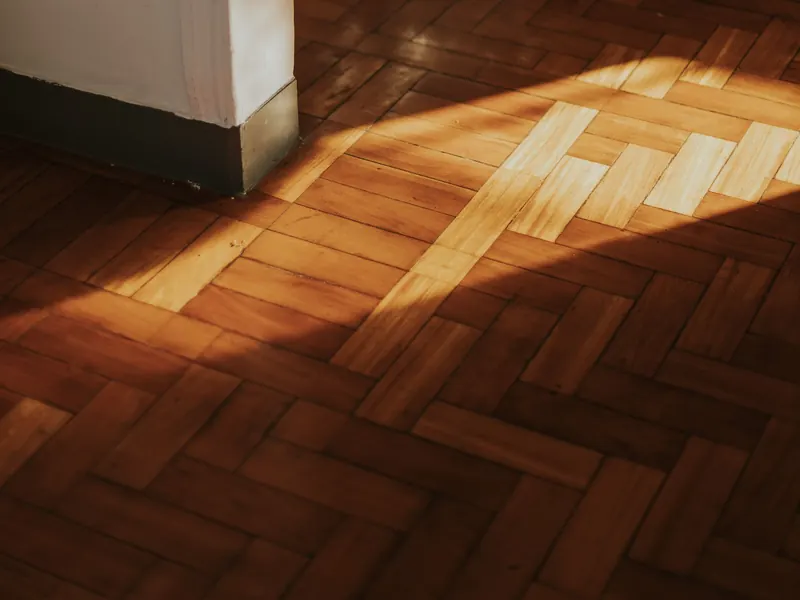
Why parquet is trickier to sand than strip flooring
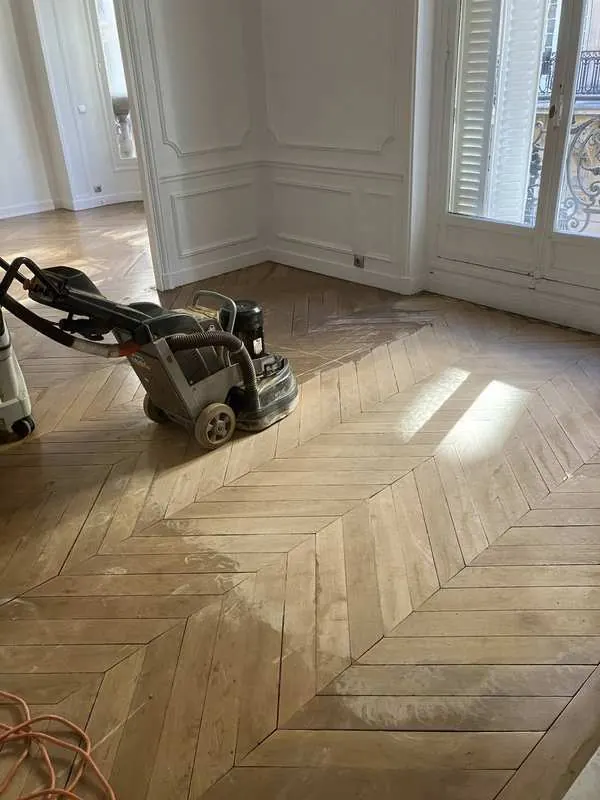
On a strip floor, the sander runs with the grain of every board. On parquet, any pass of the machine is going across the grain on part of the floor, and across-grain sanding leaves scratches that show clearly once finish goes on. That is why parquet is usually sanded in more stages than a strip floor:
- Flattening passes remove the old finish and level blocks that have shifted, often working on an angle to the pattern rather than straight down the room.
- Multi-disc or rotary sanding follows to blend out the cross-grain scratches the first passes leave, stepping through finer grits each time.
- Edges, corners and borders are detailed separately, with extra attention where the border meets the field so the transition looks crisp.
The other big variable is thickness. Some parquet is solid tongue-and-groove wood with plenty left to sand; some glued-down block parquet is only about 5/16 inch thick, and floors sanded several times have less. Over-sanding thin parquet can expose tongues or loosen blocks, so the goal is to remove only what the floor needs. A photo of a block edge at a register or threshold helps. More on equipment and dust control is on the floor sanding page.
Refinish or screen and recoat?
Not every tired parquet floor needs sanding. If the finish is intact and mostly dull or lightly scuffed, a screen and recoat may be enough, and it keeps the wood you have for later. Signs that point to a full sand and refinish instead:
- Gray or bare wood showing where the finish has worn through, especially at doorways and in front of sofas
- Dark staining from water or pets that has gone into the wood
- Blocks that have lifted, shifted or become uneven, so the floor isn’t flat underfoot
- Old finish that has turned deep orange or amber and you want a lighter, more neutral look
- A waxed floor: polyurethane won’t bond over wax, so a recoat isn’t an option until the wax is removed by sanding
Loose and missing blocks
Clicking, hollow-sounding or rocking pieces are common in old parquet: adhesive dries out over decades, and leaks and humidity swings loosen blocks further. Repairs come before sanding, because a sander can catch a loose piece and pull it out. Typical work includes:
- Lifting loose blocks, cleaning the back and the subfloor, and re-gluing them with an adhesive suited to the floor
- Replacing missing or damaged pieces, ideally with blocks taken from a closet or under built-ins so the species, age and color match
- Filling small gaps between fingers or slats, while accepting that some seasonal movement is normal
New wood never looks identical to century-old wood, even under the same finish, so expect repairs to blend in over time.
Old black adhesive, asbestos and lead: test first
Many parquet floors were glued down with a black, asphalt-based adhesive often called mastic or cutback, and some of these mid-20th-century adhesives contain asbestos. Intact adhesive sealed under the wood is not normally a hazard, but lifting blocks, scraping old glue or sanding into it can release fibers. If you see black adhesive, or aren’t sure what is under the floor, have a sample tested before any blocks are pulled up or adhesive is disturbed. The EPA’s guide to protecting your family from asbestos exposure is a good starting point, and Massachusetts has its own rules for asbestos removal.
The same goes for paint. In buildings from before 1978, painted baseboards, thresholds and old painted borders may contain lead, so mention them on your quote request. The EPA RRP program explains lead-safe work practices.
Stain and finish choices for parquet
Because the blocks face different directions, they catch light and absorb stain differently. That is part of parquet’s appeal, but it also means:
- Clear or natural finishes are the most common choice and show the pattern without exaggerating the contrast between blocks.
- Dark or gray stains make the direction changes and any cross-grain scratches stand out more. Test samples on the actual floor first.
- Water-based finishes keep the wood closer to its sanded color, dry faster and have less odor, which helps in a shared building. Oil-modified finishes add a warm amber tone that deepens over time.
- Satin or matte sheens hide small dents and dust better than gloss.
Refinishing parquet in a condo or apartment building
A lot of parquet around here sits in multi-unit buildings, so the building often sets the schedule as much as the floor does. Before booking, check:
- Association or management approval: some buildings want notice or sign-off before any flooring work.
- Certificate of insurance (COI): many associations ask for one naming the building before work starts.
- Work hours and neighbors: sanding is loud and carries to the unit below, so a short note to nearby units helps.
- Elevator and hallways: reserve the elevator if there is one, and plan for padding and hallway protection.
- Odor and ventilation: plan airflow so finish odor doesn’t drift into shared halls, and say whether you will be staying elsewhere during finishing.
- Parking and loading: resident-only streets affect equipment drop-off.
The city pages cover local building and parking notes in more detail: Brookline, Boston and Cambridge. The process and timeline page explains what each day of a refinish looks like, and the FAQ covers questions such as staying home during the work.
What to send for a quote
Use the quote form. In the notes, mention that the floor is parquet (and the pattern if you know it), the rooms, any loose or missing blocks, any black adhesive you have seen, building rules and your timing. After you submit, reply to our email with photos: a wide shot of each room, a straight-down close-up of the pattern and any problem spots.
Or call (857) 837-1234.
Related guides and areas
More on full hardwood refinishing and stair refinishing; older softwood floors have their own fir and pine guide. Parquet is most common in pre-war buildings in Brookline, Boston and Cambridge, and it turns up in older homes across the rest of the service area.
Frequently asked questions
Can parquet floors be sanded and refinished?
Usually, yes. Solid parquet with enough wood left can be sanded and refinished, though it takes longer than strip oak because the grain changes direction from block to block. Thin glued-down block parquet has less wood to work with and may only take a light sanding or a screen and recoat.
Do loose or missing parquet blocks have to be fixed first?
Yes. Loose blocks are re-glued and missing ones replaced before sanding, because a sander can catch a loose piece and tear it out. Replacement blocks are often taken from a closet or other hidden area so the wood matches as closely as possible.
Is the black glue under old parquet dangerous?
It can be. Some black asphalt-based flooring adhesives from the mid-20th century contain asbestos. It is not a hazard while it stays intact under the floor, but have it tested before blocks are pulled up or old adhesive is scraped or sanded. See the EPA’s asbestos guidance.
Can parquet be stained a darker or gray color?
It can, but test first. Because the blocks face different directions, they absorb stain differently and the pattern shows more strongly with dark or gray colors. Many owners keep parquet clear or use a light, warm stain so the pattern reads evenly.
Do I need condo association approval to refinish parquet?
Often. Many buildings ask for advance notice, a certificate of insurance, set work hours and an elevator reservation, and some require management approval before any flooring work. Check your building’s rules and include them in your quote notes.
Photos are licensed stock and Creative Commons images used as examples. Photo credits