
Boston homeowners, condo owners and landlords looking for hardwood floor refinishing can request a free quote from Boston Hardwood Refinishing. The city’s housing runs from Back Bay brownstones and Beacon Hill rowhouses to Dorchester triple-deckers, West Roxbury colonials and new condo buildings in the Seaport. Each changes how a refinish is planned, and most of the questions come down to the floor itself, the building and the calendar.
Prefer to talk it through? Call (857) 837-1234.
Why Boston homeowners refinish
Common reasons: getting a condo ready to list, turning over a rental unit (many Boston leases end September 1), original hardwood uncovered during a renovation, worn finish in kitchens, halls and entries, and a color change after years of an orange or dated stain. If the finish is still intact and only dull, start with the recoat vs refinish guide. A lighter maintenance coat may be all you need. If the unit is going on the market, the guide to refinishing floors before selling covers timing the floors around repairs, painting and listing photos.
Homes in Boston
Boston’s housing runs from Back Bay and South End brownstones to the triple-deckers of Dorchester, Jamaica Plain, and Roslindale, plus condo buildings in nearly every neighborhood. Each type changes how a refinish gets planned—stairs, shared halls, and building rules matter as much as the floor itself.
- Condo & apartment buildings
- Triple-deckers
- Brownstones & rowhouses
- Single-family colonials
- Multi-family rentals
Boston housing age by the numbers
According to the U.S. Census Bureau’s American Community Survey (2020–2024 5-year estimates), Boston has about 310,625 housing units. Roughly 47% were built in 1939 or earlier and about 58% before 1960.
Nearly half of Boston’s homes predate 1940, so original oak strip, older fir and pine in back rooms, and floors that have already been sanded several times are common. In older buildings it is worth asking how much wear layer is left before planning a full sand.
Source: U.S. Census Bureau, ACS 5-year estimates, table B25034 (Year Structure Built), via Census Reporter and data.census.gov. Figures are estimates with margins of error. Lead-safe work rules for homes built before 1978: EPA RRP program.
Boston neighborhood notes for floors
Boston is a city of neighborhoods, and the housing in each one leaves its own mark on the floors. What tends to show up, neighborhood by neighborhood, when a refinish is being planned:
- Dorchester, Jamaica Plain and Roslindale: the heart of the city’s triple-decker housing, mixed with two-families and Victorian single-family houses on the hillier streets. Front rooms are usually oak strip, while kitchens, pantries and back bedrooms are often fir or pine. Because many of these houses were renovated one unit at a time, the second floor can be in very different shape from the first.
- Back Bay, the South End, Beacon Hill and Bay Village: 19th-century brick and brownstone rowhouses, most of them now divided into condos. Smaller conversions rarely have an elevator, so narrow, turning stairs are the route for every machine. Parlor-floor units sometimes keep parquet or an inlaid border, and curb space is scarce enough that equipment access belongs in the first conversation.
- Charlestown: some of the oldest houses in the city line its narrow streets. Wide pine boards, face nails and floors that slope toward the center of the house are not unusual, and they call for a lighter hand than oak strip. Newer and converted condo buildings around the Navy Yard are more likely to have engineered flooring.
- South Boston: rowhouses and triple-deckers on the older blocks, plus a large number of recent condo buildings. In the older units, look for patched sections where walls or chimneys came out; in the newer ones, confirm solid versus engineered boards before a sand is planned.
- East Boston: two- and three-family houses on tight lots, with newer condo buildings toward the waterfront. Older units often carry layers of past remodels, such as vinyl or plywood over the boards, which have to come up before anyone can judge the wood underneath.
- West Roxbury and Hyde Park: mostly single-family colonials, capes and bungalows from the early and middle 20th century. Carpeted-over oak strip is the classic find, and the staircase to the second floor is usually worth including in the same visit (see stair refinishing). Driveways make access far simpler than downtown.
- Allston, Brighton and Mission Hill: heavy rental housing near the colleges and hospitals, where many units change hands every year. Floors wear in the same lanes (entry, hall, kitchen), and a maintenance recoat between leases can stretch the time before a unit needs a full sand.
- The Fenway and the newer high-rise districts: pre-war apartment buildings in the Fenway can have parquet, while recent towers in the Seaport and downtown mostly have engineered or factory-finished floors with a limited wear layer.
Floors common in Boston homes
- Oak strip in most early and mid-20th-century homes and many condo conversions. It is the easiest floor to refinish and takes stain well.
- Douglas fir and yellow pine in triple-decker kitchens, back rooms and upper units in Dorchester, JP, Roslindale and Charlestown. Softwood dents easily and can blotch with stain. See the guide to refinishing old fir and pine floors.
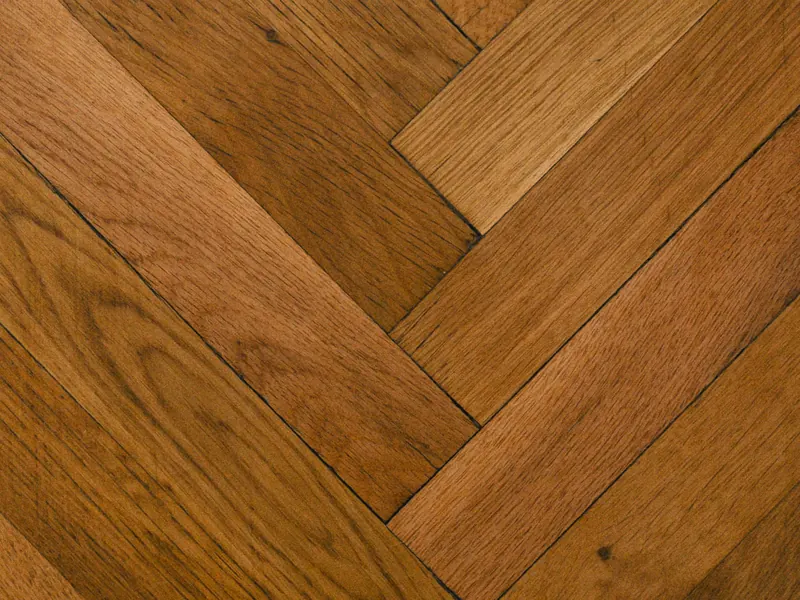
- Parquet and inlaid borders in some brownstones and pre-war buildings in Back Bay, the South End and the Fenway. Patterns are sanded in several directions and are often done with a multi-disc sander to avoid cross-grain marks.
- Wide-board pine in some of the oldest houses, such as parts of Charlestown and Beacon Hill. These are often face-nailed and uneven, and need a gentle approach.
- Engineered hardwood in many newer condos. Some can be sanded once or twice; thin wear layers may only take a screen & recoat. The engineered hardwood refinishing guide explains how to check the wear layer.
Planning a refinish in a Boston condo or multi-family
Most Boston projects are a single unit in a larger building. Building access and neighbors shape the plan as much as the floor. Check your condo documents or management for rules about work hours, elevator padding, move-in/move-out reservations and certificates of insurance, and include them in your quote notes. Letting neighbors know the dates ahead of time saves friction, because sanding is loud and noise carries between units. A shareable, step-by-step list for owners, boards and property managers is on the condo floor refinishing checklist.
In much of Back Bay, the South End and Beacon Hill, the building is a converted rowhouse with only a handful of units, and the association is often run by the owners themselves rather than a management company. The trustees may simply be the neighbors upstairs, and the rules live in the master deed, the bylaws and any house rules adopted since. Look for what they say about work hours, advance notice to other owners and floor coverings, since some associations ask upper-floor owners to keep rugs over hardwood to cut noise. With no elevator, sanders and finish travel up the common stair, so protecting that stair and keeping it clear is part of the job. Parlor-floor parquet has its own approach, covered in the parquet floor refinishing guide.
If you are turning over a rental, the gap between tenants is usually the best window. Include move-out and move-in dates, and note that the weeks before September 1 are busy across the city.
Local logistics to mention on your quote
- Building rules: quiet hours, certificate-of-insurance requests, elevator padding, and move-in/move-out windows.
- Parking & access: street parking can be tight and many neighborhoods are resident-permit only—note whether there’s a driveway, loading area, or visitor permit option.
- Triple-decker units: each unit is usually scoped on its own; mention shared stairwells and back hallways.
- Older floors: decades of renovations can leave patched or mixed boards—point them out so they’re part of the quote.
- Painted or covered floors: mention painted borders or old linoleum and adhesive. In older homes these can contain lead paint or asbestos and should be tested before sanding or scraping.
Scheduling around Boston’s September 1 move-in week
Across much of Boston, leases end and begin on September 1, and the days around it are some of the busiest of the year on residential streets. For a landlord, the empty stretch between tenants is usually the only time a unit can be sanded with nobody living in it, so the floors have to fit between the move-out walkthrough, any repairs and painting, and the day keys change hands. Treat the cure time before furniture arrives as part of that window, not something that happens after it.
Curb space is tight that week. The City’s Parking Clerk notes that from August 31 to September 2 some common moving locations are blocked off for moving-truck drop-offs, and that its moving-truck permits are only for moving trucks, not other vehicles or deliveries. Holding street space for work vehicles is a separate Public Works street occupancy permit, which has to be requested at least seven business days before the space is needed. If the work lands near the first of the month, mention parking on the quote request and leave a cushion on both sides of the move date.
Owners of a Boston two- or three-family often refinish one unit at a time as each lease turns over, rather than the whole house at once. Say which unit is empty and which are occupied. The shared front and back stairs are how the other households come and go, so a common stair or hall is best done on a day when the building can manage with one route. If the top unit is the one turning over, equipment and finish have to be carried past the occupied floors, which is worth flagging to tenants in advance. Using the same finish and sheen in every unit lets the later ones match the first.
Older rentals carry one more check. Under the Massachusetts Lead Law, when a unit built before 1978 is home to a child younger than six, the owner must deal with lead hazards there, and a fresh coat of floor finish does not count toward that. Have painted thresholds, stair risers or painted floorboards tested before they are sanded.
Boston’s architectural districts and interior floors
Several Boston neighborhoods fall inside architectural or landmark districts, each with a commission staffed through the Boston Landmarks Commission. The City describes their review in terms of exterior work. The Back Bay Architectural Commission reviews all proposed exterior work, the Beacon Hill Architectural Commission reviews outside work that is visible from public streets and spaces, and the South End Landmark District Commission reviews exterior work on front facades, plus rooftops and side or rear walls that face a public way. None of those descriptions reaches sanding and refinishing the wood floors inside a home or condo unit, which is interior work.
Two things still apply. When exterior jobs ride along with the floors, for example rebuilt front steps, an entry door or a roof deck, talk to the district’s commission staff before anything starts, because the City asks owners not to begin reviewable work or buy materials until it is approved. And the condo association’s own rules apply inside a district just as they do anywhere else. Each district page links a map for checking whether an address is in the district at all.
Services available in Boston
- Full hardwood refinishing: sand to bare wood, optional stain, new finish
- Floor sanding with dust-controlled options (not zero dust)
- Stair refinishing: treads, risers, nosings and landings
- Help choosing screen & recoat vs full refinish
Process snapshot
Prep → sand → optional stain → finish coats → cure. Full walkthrough, including whether you can stay home during the work: process & timeline.
What to prepare for a quote
It helps a Boston request to name the neighborhood and street, the kind of building (triple-decker, rowhouse condo, single-family or newer condo) and which floor the unit is on. Say whether there is an elevator, a driveway or only resident-permit parking, and note any association hours or paperwork. List the rooms, any stairs, carpet or vinyl still to come up, and painted boards or risers. For a rental, give the day the outgoing tenant leaves and the day the next one arrives. Add a phone number or email for the reply. Once the form is sent, respond to the confirmation with pictures: each main room from its doorway, the stair up to the unit, and a close-up of a board edge at a vent or threshold if the floor might be engineered.
Nearby areas served
Also covering Cambridge, Somerville, Brookline, Newton, Waltham, Quincy and Framingham. Newer service-area pages: Arlington, Medford, Watertown, Belmont and Needham. Full list: service areas.
Or call (857) 837-1234.
Frequently asked questions
Which Boston neighborhoods are covered?
Boston neighborhoods including Back Bay, Beacon Hill, the South End, Fenway, Dorchester, Jamaica Plain, Roslindale, West Roxbury, Hyde Park, South Boston, Charlestown, East Boston, Allston and Brighton.
Do you work with condo building rules?
Yes. Quiet hours, insurance certificate requests, and elevator/move rules shape the plan—list them in the notes on the quote form so scheduling stays realistic. This site does not override your condo docs.
Noise / elevator logistics?
Sanding is loud; plan weekday windows your building allows. Elevator padding and parking for equipment are common asks—confirm with management before the start date.
Can you refinish a unit between tenants?
Yes. Include the move-out and move-in dates on your quote request. The weeks before September 1 fill up across Boston, so earlier requests have more scheduling room.
Can engineered floors in a newer condo be refinished?
Sometimes. It depends on the thickness of the top wear layer. Mention “engineered” in your notes and, if possible, send a photo of a board edge at a threshold or vent.
Do Boston’s architectural district commissions review floor refinishing inside a home?
Based on the City of Boston’s descriptions, the Back Bay, Beacon Hill and South End commissions review exterior work, so refinishing floors inside a home or condo unit is not part of that review. Any exterior work done at the same time, such as steps or an entry door, should be cleared with commission staff before it begins.
Can a Boston triple-decker be refinished one unit at a time?
Yes. Many owners refinish each unit as its lease turns over. List which units are empty and which are occupied, and how the shared front and back stairs are used, so common areas can be planned for a day when the building can manage with one route. Using the same finish and sheen in each unit helps them match.
Photos are licensed stock and Creative Commons images used as examples. Photo credits