
Somerville homeowners, condo owners and landlords looking for hardwood floor refinishing can request a free quote from Boston Hardwood Refinishing. Somerville is one of the most densely built cities in New England, and most homes are two- and three-family houses from roughly the 1880s to the 1920s. That shapes what the floors are made of and how a refinish gets scheduled.
Prefer to talk it through? Call (857) 837-1234.
Why Somerville homeowners refinish
Common reasons to refinish in Somerville: condo conversions and sales, unit turnover (many leases run September to September), original floors uncovered during a renovation, and worn finish in kitchens and hallways. If the finish is intact and only dull, start with the recoat vs refinish guide.
Homes in Somerville
Across Davis Square, Ball Square, Teele Square, Spring Hill, Winter Hill, Prospect Hill, Union Square, Magoun Square and East Somerville, the classic house is the triple-decker or a two-family with stacked units and a shared front stair. Many have been converted to condos. There are also mansard cottages, some single-family Victorians, and newer condo buildings near the Green Line extension stations.
- Triple-deckers
- Two-family homes
- Condo conversions
- Single-family Victorians
Somerville housing age by the numbers
According to the U.S. Census Bureau’s American Community Survey (2020–2024 5-year estimates), Somerville has about 37,756 housing units. Roughly 59% were built in 1939 or earlier and about 69% before 1960.
Somerville has the oldest housing of the communities served here: roughly three in five homes were built before 1940. Expect older softwood and oak in stacked units, previous sandings and painted trim that predates 1978 lead rules.
Source: U.S. Census Bureau, ACS 5-year estimates, table B25034 (Year Structure Built), via Census Reporter and data.census.gov. Figures are estimates with margins of error. Lead-safe work rules for homes built before 1978: EPA RRP program.
Somerville neighborhood notes for floors
Somerville is only about four square miles, but the housing still shifts from one part of the city to the next. A few patterns worth knowing before you request a quote:
- Davis, Teele and Powderhouse Squares (West Somerville): side streets of two-families mixed with single-family houses. If one unit is refinished now and the other later, matching the sheen and color between them is a fair thing to ask about.
- Spring Hill, Prospect Hill and Winter Hill: some of the city’s older Victorians and mansard-roof houses sit on steep streets. Long, steep front stairs and tight turns make the path for heavy sanders part of the plan, so say how equipment would get to your door.
- Union Square and East Somerville: close-set two- and three-family houses, many renovated more than once. Expect patched sections, old thresholds where rooms were combined and flooring layered over the original boards.
- Ball, Magoun and Gilman Squares: long rows of triple-deckers with stacked floor plans. The same layout repeats on each level, which makes it easier to plan two or three units in sequence when one owner holds the building.
- Assembly Square and the blocks around the newer Green Line stations: more recent apartment and condo buildings, where floors are more likely to be engineered or factory-finished. Those need a check of the top wood layer before anyone sands; the condo floor refinishing checklist covers the building-side paperwork.
Floors common in Somerville homes
- Douglas fir and yellow pine in many units, especially kitchens and back rooms. Softwood dents easily and can blotch with stain, so clear or lightly tinted finishes usually look best. See the fir & pine floor guide.
- Oak strip in front parlors of many triple-deckers, sometimes with a simple border.
- Floors hidden under carpet, vinyl or laminate, often with adhesive or staples to remove first.
- Patched areas where walls, radiators or chimneys were removed in a renovation. These may need board weaving before sanding.
- Painted softwood on back stairs, in pantries and in attic bedrooms. In a house built before 1978, that paint should be tested for lead before it is sanded (see the EPA lead-safe renovation rules).
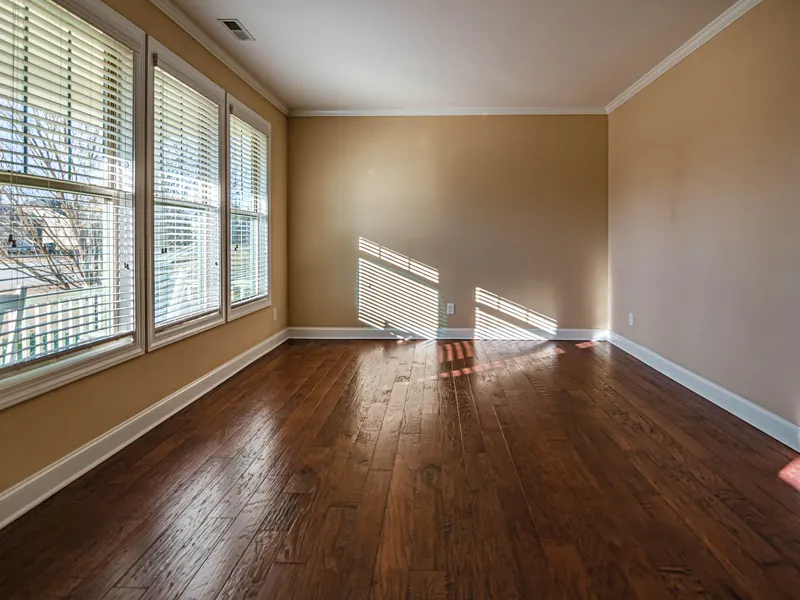
How a triple-decker layout shapes the work
Most Somerville triple-decker units follow a similar plan: a front parlor and dining room facing the street, bedrooms off a long side hall, and the kitchen and pantry at the back by the rear stair and porch. Because that hall ties every room together, sanding and coating usually start in the rooms farthest from the exit and finish at the door, and the kitchen may be off limits while coats dry.
That leaves two common ways to schedule a unit. One is to do every room at once while the household stays somewhere else for the coating days, which gives one continuous finish. The other is to split the unit into front rooms and back rooms done in two rounds, which keeps part of the home usable but leaves a seam, usually placed at a doorway or threshold where it shows least. Say which approach you lean toward on the quote request.
Two more details are typical of these houses. Cast-iron radiators are heavy and usually stay where they are, so the floor around and under them is finished by hand; mention how many there are. And the rear porches and porch stairs are exterior painted decking, which is a different job from refinishing the hardwood inside.
Planning a refinish in a Somerville triple-decker or condo
The typical Somerville project is a single unit in a two- or three-family house, so building access and neighbors shape the plan. Equipment usually comes up a shared front or back stair, and noise carries between floors. Letting co-owners or tenants in the other units know the dates ahead of time saves a lot of friction. If you own the whole building, refinishing units as they turn over keeps disruption low.
Original Somerville floors are often a mix of species within one unit: oak in the front parlor and dining room, fir or pine in the kitchen and back bedrooms, and sometimes later oak patched in where a wall came out. Sanding everything and applying one finish brings them together visually, but the woods will still show different color and grain. Most owners treat that as part of the character of an older house.
Many units have also been through a renovation or two, which can leave floating floors, vinyl or carpet over the original wood. Removing those, cleaning up adhesive and fixing damaged boards are separate steps worth noting on your quote request so the scope is clear from the start.
Floor sound between units is a common Somerville complaint. Refinishing doesn’t change how sound travels through a floor, but area rugs with good pads in living spaces and bedrooms help. If you are replacing damaged sections, ask your condo association whether there are underlayment requirements before new boards go in. If the damage came from a leak in the unit above, the water-damaged floors guide covers drying the floor out before any boards are replaced.
Old kitchen flooring: test before you pull it up
Many Somerville kitchens and back halls have had sheet linoleum, 9-inch square tiles or vinyl laid over the original wood, often on a layer of black adhesive. Some flooring and adhesives made before the 1980s contain asbestos, and you can’t tell by looking. If you are thinking of tearing up an old kitchen floor to see what is underneath, have a sample tested first; the EPA asbestos guidance for homeowners explains why disturbing it is the risky part. Once the old layers are safely gone, the softwood under them is often worth saving, and the fir & pine guide covers what to expect from it.
Refinishing before a condo sale or a September 1 turnover
Condo sales and the many Somerville leases that start on September 1 both put a hard date on the floors. Work backward from that date: the floor needs time to cure before furniture, staging or a moving truck arrives, and late summer is when the most units in the city turn over at once. Putting the listing-photo date or the move-in date on the quote request lets the schedule be built around it rather than squeezed in.
Not every sale or turnover needs a full sand-down. If the finish is scuffed and dull but the wood is still an even color, a screen and recoat can freshen a unit with less time out of service; if wear has reached bare wood in the hall or kitchen, only a full refinish will make those lanes disappear. For the order of the stages, so showings or key handoffs can be planned around them, see process & timeline, and for a step-by-step pre-listing plan, the guide to refinishing floors before selling.
Service options
Full hardwood floor refinishing (sand, optional stain, new finish), floor sanding for bare or damaged wood, and help deciding between a maintenance recoat and a full sand-down (the screen and recoat guide covers the home checks, including waxed and prefinished floors). For what the days look like, see process & timeline. Common questions are answered on the FAQ page.
Local logistics to mention on your quote
- Stacked units: In a triple-decker, the unit below hears everything. Let us know if other units are occupied so noise and dust control can be planned.
- Lease dates: Include vacancy and move-in dates. The weeks before September 1 are busy across Somerville.
- Parking & access: Much of Somerville has resident permit parking and narrow streets. Mention driveway or visitor permit options and which entrance to use.
- Shared stairs: Common front and back stairs are usually scoped separately. Check with co-owners or your condo association first.
What to prepare for a quote
For a Somerville unit, the most useful details are which floor of the house it is on, roughly how many rooms, whether the other units are occupied, and any vacancy, closing or move-in date. Note anything under the floor you already know about (old linoleum, carpet, painted boards) and how many radiators there are. Add your ZIP code and a phone number or email. Once the form is in, answer the confirmation email with pictures: one showing each room from the doorway, plus the most worn spot, which in these units is usually the kitchen doorway or the hall.
Other areas covered
Boston, Waltham, Quincy, Framingham, Newton, Brookline, Cambridge. Newer service-area pages: Arlington, Medford, Watertown, Belmont and Needham. Full list: service areas.
Or call (857) 837-1234.
Frequently asked questions
Is Somerville covered?
Yes, including Davis, Ball, Teele, Union and Magoun Squares, Spring Hill, Winter Hill, Prospect Hill, East Somerville and Assembly Square.
Do the old floors in my triple-decker need to be replaced?
Not usually. Most original fir, pine and oak floors can be sanded and refinished. Boards that are cupped, rotted or very thin from past sanding may need spot replacement first.
Can you work with other units occupied?
Yes. Tell us which units are occupied and any building rules so noise, dust containment and access can be planned.
Is it worth refinishing before selling a Somerville condo?
Refinished floors are one of the most visible upgrades in listing photos and showings. Whether it makes financial sense depends on the floor’s condition and your timeline. If the finish is only dull, a maintenance recoat may be enough.
What should a Somerville quote request include?
Use the short quote form or call (857) 837-1234. List the rooms, which floor of the house the unit is on, any stairs, and your lease, closing or move-in dates, then send floor photos in answer to the confirmation email.
Will the oak and fir in my unit match after refinishing?
They will look more alike, but not identical. Sanding everything and applying one finish evens out the old wear and yellowing, yet oak and fir still differ in grain and natural color. A clear or lightly tinted finish usually lets both look intentional; a dark stain tends to exaggerate the difference because fir and pine absorb it unevenly.
Can I pull up old kitchen linoleum myself before the refinish?
Test it first. Older sheet flooring, 9-inch tiles and the black adhesive under them can contain asbestos, which is a hazard once it is broken up or sanded. Have a sample tested before removal; the EPA asbestos guidance explains the precautions. Mention the old flooring on your quote request either way so the scope is clear.
Photos are licensed stock and Creative Commons images used as examples. Photo credits