
Waltham homeowners, condo owners and landlords looking for hardwood floor refinishing can request a free quote from Boston Hardwood Refinishing. Waltham’s housing spans Moody Street and downtown multi-families and mill-era buildings, single-family streets in Warrendale and Cedarwood, Lakeview and Hardy Pond, Piety Corner, Banks Square, Riverfront and Bleachery condos, and homes near Bentley University. Many of these places still have original oak, fir or pine—sometimes under carpet—and the right plan depends on the floor, who lives there and your calendar.
Prefer to talk it through? Call (857) 837-1234.
Why Waltham homeowners refinish
Common reasons: rental turnover between tenants, getting a house ready to list, pulling up old wall-to-wall carpet and finding hardwood underneath, worn finish in kitchens, halls and entries, and pet scratches in busy family homes. Landlords often schedule a refinish in the gap between move-out and the next lease so the unit shows better and the finish has time to cure. Not every floor needs bare-wood sanding. If the finish is still intact and only dull or lightly scratched, start with the recoat vs refinish guide. Wear into the wood, gray spots or a change of stain color usually mean full refinishing.
Homes in Waltham
Waltham grew as a mill city along the Charles, so the housing stock mixes older two- and three-family buildings near Moody Street and downtown with single-family neighborhoods on the hills and newer condo communities along the river. Each type changes how a refinish is planned: tenant access, association rules, stairs between units and continuous main-floor runs matter as much as the wood.
- Older multi-family & mill-era homes
- Single-family colonials & capes
- Warrendale & Cedarwood houses
- Riverfront & Bleachery condos
- Rental units between tenants
Waltham housing age by the numbers
According to the U.S. Census Bureau’s American Community Survey (2020–2024 5-year estimates), Waltham has about 26,728 housing units. Roughly 28% were built in 1939 or earlier and about 49% before 1960.
Roughly half of Waltham’s homes were built before 1960, from older mill-era multi-families near the Charles to post-war single-families and newer condos, so rentals and mixed floor types are common.
Source: U.S. Census Bureau, ACS 5-year estimates, table B25034 (Year Structure Built), via Census Reporter and data.census.gov. Figures are estimates with margins of error. Lead-safe work rules for homes built before 1978: EPA RRP program.
Floors common in Waltham homes
- Oak strip in single-family colonials, capes and many mid-century homes across Warrendale, Cedarwood and Lakeview. Living rooms, halls and bedrooms often share continuous runs that refinish well once carpet, pad and tack strips are gone.
- Fir or pine in older multi-family and mill-era buildings near downtown and Moody Street. Softwood dents easily and can blotch with stain; see the guide to refinishing old fir and pine floors.
- Mixed or patched floors where a kitchen was opened, a wall came out or units were combined. New boards woven into old oak need to be scoped so the color blends after sanding.
- Engineered hardwood in newer Riverfront, Bleachery and other condo communities. Some can be sanded once or twice; thin wear layers may only take a screen & recoat.
- Stairs and landings in two- and three-families and colonials, often carpeted or worn in the center of each tread. They can be done with the floors; see stair refinishing.
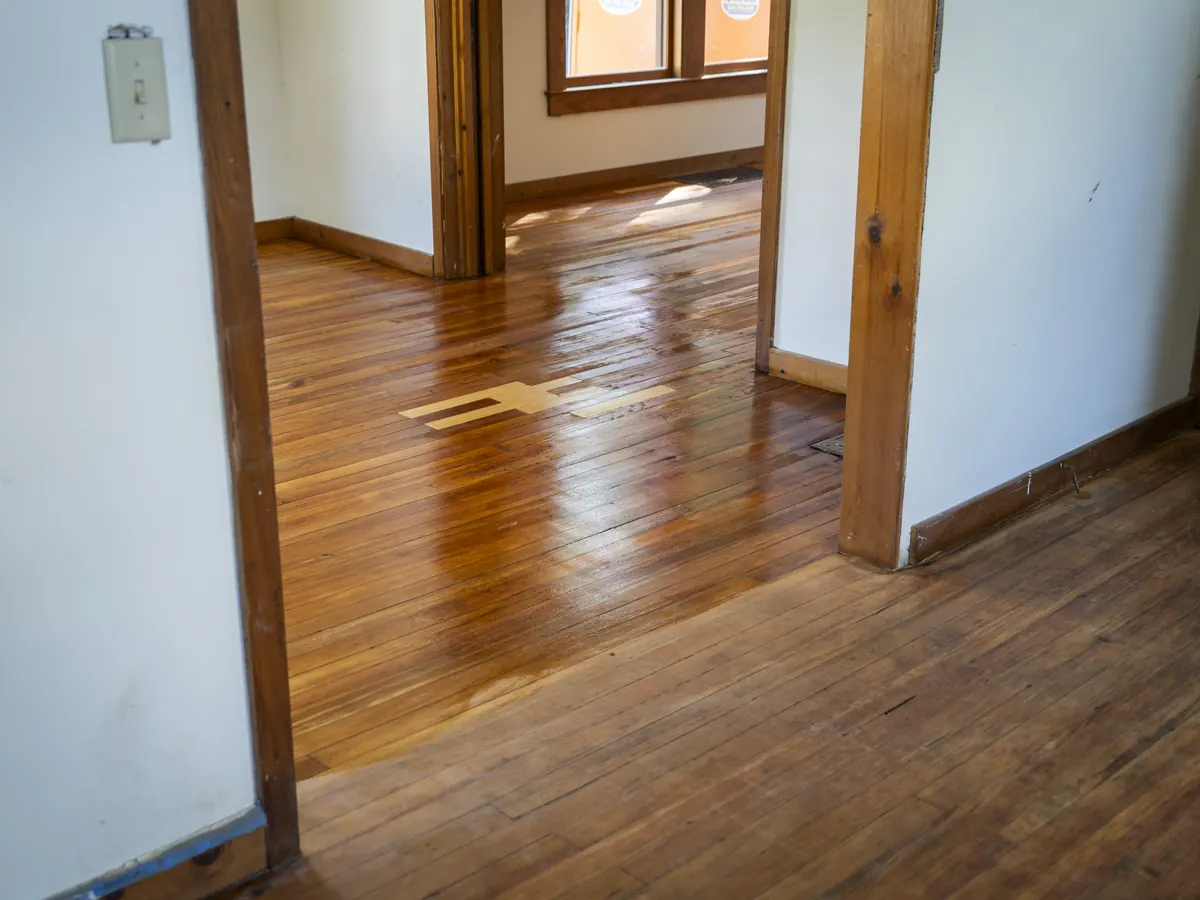
Refinishing between tenants or before listing
This is one of the most common Waltham questions—especially for landlords near Moody Street and downtown, and for owners getting a house ready to sell. The guide to refinishing floors before selling covers timing the floors around repairs, painting and listing photos. A few details change the plan:
- Access. Who has keys, and will the unit be empty? Note the move-out date and whether a realtor or property manager needs to be copied on scheduling.
- Cure time before furniture or new tenants. Finish needs time to harden before heavy furniture, rugs or a new lease starts. Put the target move-in or listing date in your quote notes so the schedule leaves a buffer after the last coat.
- Photos for quotes. Empty units photograph cleanly. Send wide shots of each room plus close-ups of worn spots, stairs and any patched boards. If carpet is still down, a lifted corner in a closet is enough to start.
- Lease and listing dates. Mentions of open houses, lockbox timing or a hard lease start help sequence sanding, stain and finish coats without rushing dry time.
Near Bentley and Brandeis, many leases follow the school year, which pushes floor work into early summer or the last weeks of August. The earlier window is usually easier: there is more time for repairs and painting before sanding, and the finish can cure well before the next group moves in. Units that turn over at the end of August leave very little margin, so book early and pick a finish with a shorter recoat time if the gap is tight.
If the unit is still occupied, say so. Work can sometimes be sequenced room by room, but a vacant turnaround usually gives a more even result and fewer scheduling conflicts.
Waltham neighborhood notes for floors
Waltham’s neighborhoods were built in different eras for different kinds of households, and the floors reflect it. Here is what tends to matter in each part of the city when a refinish is on the table:
- Moody Street, downtown and the Common: the city grew outward from the mills on this stretch of the Charles, and the side streets are lined with two- and three-family houses built for the people who worked in them. Expect oak in the front rooms, softwood in kitchens and back halls, and enclosed stairs shared by more than one unit. Most of these buildings are rentals or small condos, so each unit is usually planned on its own.
- The South Side and Bleachery: dense older housing south of the river, much of it multi-family, plus converted and newer condo buildings. Older units often have vinyl, carpet or plywood laid over the original boards, which has to come up before the wood can be judged.
- Warrendale and the Highlands: hillside streets of single-family colonials and older two-families. Main floors are often continuous oak from the front door to the dining room, and the front staircase usually belongs in the same plan.
- Cedarwood, Trapelo Road and Piety Corner: mostly single-family houses from the middle of the 20th century onward, including capes, ranches and split-levels. Oak strip under carpet is common, as are later additions where new boards meet old ones at a doorway.
- Lakeview and Hardy Pond: single-family streets where one open main floor is often done as a single area, with the household staying on another level or away while the finish dries.
- Banks Square and the Newton Street area: single-family and multi-family houses side by side near a small commercial strip, so street parking and shared-driveway notes help with equipment access.
- Near Bentley and Brandeis: owner-occupied houses mixed with rentals that change tenants on the academic calendar. These units see concentrated wear in entries, kitchens and hallways.
- Riverfront condo and apartment communities: newer buildings along the Charles, mostly engineered or factory-finished floors, with elevators, management offices and set work hours.
Floors in Waltham’s mill-era houses
The Boston Manufacturing Company opened its first mill on Moody Street in 1814, and the Library of Congress credits it with starting large-scale industrialization in the United States. A watch factory arrived later in the century and gave Waltham the nickname Watch City. The housing that went up around those employers is still a big part of the city, and it shapes floor work in a few predictable ways:
- Two kinds of wood in one unit. Front rooms were often finished in oak, while kitchens, pantries and back bedrooms got fir or pine. After sanding, the two take finish differently, so it is worth deciding up front whether to keep the contrast or use a stain that narrows it.
- Boards that have been patched more than once. Chimneys removed, kitchens moved and walls opened leave rows of newer boards. Those are scoped before sanding so the replacement wood can be woven in rather than left as a visible stripe.
- Floors that are not quite level. Older framing settles. Sanding can smooth the surface of the boards, but it cannot take a slope out of a room, and chasing every low spot thins the wood. A lighter pass that follows the floor usually looks better and keeps more board for the future.
- Painted edges and back stairs. Painted borders, risers and service stairs are common in pre-1978 buildings and should be tested for lead before anyone sands them (see the EPA RRP program).
Softwood in these rooms also dents more easily than oak, so the finish choice and the rug plan matter. The fir and pine guide covers that in more detail.
Older Waltham houses and the Historical Commission
Owners of a century-old house sometimes ask whether the city has to sign off before the floors are touched. Waltham’s Historical Commission describes its review role as assessing potential demolitions of buildings. Under the city’s demolition delay ordinance, a significant building that is at least 75 years old can have its demolition permit held for up to 12 months while alternatives are considered. Sanding and refinishing wood floors inside a house does not demolish anything, so it falls outside that process.
The question changes if the floors are one piece of a larger project that takes down a building or part of one, such as an old rear ell or a garage. In that case, ask the Building Department early whether a demolition-delay determination is needed, since it can affect the schedule for everything that follows, the floors included. Condo association rules and lease terms still apply as usual.
Condos, multi-family and rental planning
For a condo, check association documents for work hours, parking for work vehicles, notice to neighbors and certificates of insurance, and include them in your quote notes. Many newer Riverfront and Bleachery units have engineered flooring, so say what you know about the product. In a two- or three-family, clarify whether you’re refinishing one unit or shared stairs and landings. If you’re refinishing a rental between tenants, include the move-out and move-in dates so the schedule leaves time for the finish to cure before furniture and the next lease.
Local logistics to mention on your quote
- Tenant access: note who has keys, whether the unit is vacant, and any move-out or lease dates.
- Condo COI & quiet hours: mention association rules, elevator use and certificate-of-insurance requests.
- Stairs: multi-family between-floor stairs and colonial main stairs are usually scoped separately.
- Parking & access: street parking near Moody Street/downtown, driveway notes, or condo garage rules.
- Old flooring or paint: mention old vinyl or asphalt tile, adhesive, or painted borders. In older homes these can contain asbestos or lead paint and should be tested before sanding or scraping.
- Pets & kids: mention them so the plan covers noisy sanding days and dry-time days.
- Timing: include listing, open-house, move-in or academic-calendar dates you’re working toward.
Services available in Waltham
- Full hardwood refinishing: sand to bare wood, optional stain, new finish
- Floor sanding with dust-controlled options (not zero dust)
- Stair refinishing: treads, risers, nosings and landings
- Help choosing screen & recoat vs full refinish
Process & dust expectations
Prep → sand → optional stain → finish coats → cure. Sanding days are noisy; dust-controlled equipment helps but is not zero dust. Full walkthrough, including whether you can stay home during the work: process & timeline and floor sanding. Common questions are answered in the FAQ.
What to prepare for a quote
A useful Waltham request names the street or neighborhood and says what kind of building it is: a single-family house, a single unit in a two-family or triple-decker, or a condo in a larger community. Note which floor the work is on, whether there is a driveway or only street parking, and any association hours or insurance paperwork. List the rooms and stairs, anything still covering the boards (carpet, vinyl, plywood) and any painted edges or risers. Landlords should add the move-out date and the next lease start, and sellers the photo or listing date. Leave whichever contact you prefer, phone or email. When the confirmation arrives, reply with pictures of every room taken from the doorway, the most worn area, any patched boards and the stairs.
Nearby areas served
Also covering Boston, Newton, Framingham, Brookline, Cambridge, Somerville and Quincy. Newer service-area pages: Arlington, Medford, Watertown, Belmont and Needham. Full list: service areas.
Or call (857) 837-1234.
Frequently asked questions
Which Waltham neighborhoods are covered?
Waltham neighborhoods including Moody Street and downtown, Warrendale, Cedarwood and the Trapelo Road area, Lakeview and Hardy Pond, Piety Corner, Banks Square, Riverfront and Bleachery, and the South Side / Bentley area.
Can a Waltham rental be refinished between leases?
Yes. Include the move-out and move-in (or lease start) dates on the quote form so the schedule leaves time for the finish to cure before furniture and the next tenant. Empty units are easier to photograph and clear.
How long before new tenants or furniture can the floors be used?
Light foot traffic is often possible sooner than heavy furniture or rugs. Exact timing depends on the finish system. Put your target move-in or listing date in the notes so the plan builds in cure time after the last coat.
Can engineered floors in a Waltham condo be refinished?
Sometimes. It depends on the thickness of the top wear layer. Mention “engineered” in your notes and, if possible, send a photo of a board edge at a threshold or vent. Thin wear layers may only take a screen & recoat.
Do you refinish stairs in a two- or three-family?
Often, yes. Describe whether stairs are shared or inside one unit, and whether they’re carpeted or bare wood, on the quote form. See stair refinishing for what’s involved.
Does the Waltham Historical Commission have to approve refinishing floors in an old house?
Not for the floors alone. The Historical Commission describes its review as covering potential demolitions, and refinishing interior floors does not demolish anything. If the same project takes down a building or part of one, ask the Building Department whether a demolition-delay review applies before work begins.
When is the best time to refinish a student rental near Bentley or Brandeis?
Early summer is usually easiest, because there is room for repairs and painting before sanding and the finish has time to cure before the next lease. Late-August turnovers leave little margin, so book well ahead and put both the move-out and move-in dates in the quote notes.
Photos are licensed stock and Creative Commons images used as examples. Photo credits