
Worn-through treads, carpet you want gone, or stairs that no longer match freshly refinished floors? Boston Hardwood Refinishing helps Greater Boston homeowners plan hardwood stair refinishing: treads, risers, nosings, landings and, when you want it, the handrail. Stairs take more hand work than open floor, so a clear scope up front makes the biggest difference.
Prefer to talk it through? Call (857) 837-1234.
Quick answer: what stair refinishing includes
A full stair refinish means taking each tread (the part you step on) back to bare wood, sanding the rounded nosing on the front edge, cleaning up the risers (the vertical boards) and the edges where treads meet the wall-side skirt board, then applying stain if you want it and several coats of finish. Landings are sanded like a small floor. Handrails, balusters and newel posts are optional add-ons because they are almost entirely hand work.
If the treads are only dull and the finish is still intact, a lighter screen & recoat can sometimes freshen them. If finish has worn through on the front edge of each step, which is where stairs usually fail first, a full sand is the fix.
Why stairs are different from floors
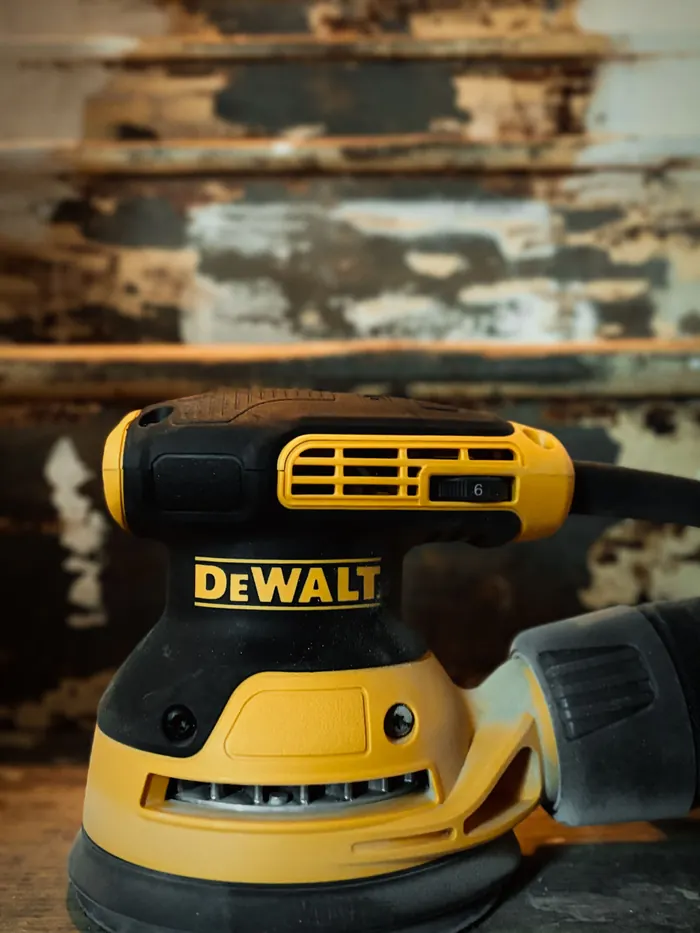
A big floor sander covers most of a room quickly. A staircase is the opposite: every tread is a small, separate surface with an inside corner on three sides and a rounded edge in front. Most of the work is done with edgers, detail sanders, scrapers and sanding by hand, one step at a time. That is why a single flight can take as much planning as a room of open floor.
- Nosings wear first. Feet land on the front edge of each tread, so finish wears through there long before the back of the step. Getting the nosing back to clean wood without flattening its rounded profile takes care.
- Corners trap old finish. The joints where the tread meets the riser and the skirt board collect decades of finish, wax and paint drips. They are scraped and hand-sanded.
- Stairs are a path, not a room. While finish dries, the stair can’t be used normally. If it is your only way up or down, the schedule has to account for that.
- Safety matters more. A glossy stair can look slick and a waxy residue can actually be slick. Sheen choice and a clean, residue-free surface are part of the job.
Stairs we commonly see in Greater Boston
Older homes around Boston have a few recurring stair situations. Knowing which one you have makes the quote request more useful.
- Carpeted stairs with hardwood underneath. Very common in colonials and capes in Newton, Waltham, Quincy and Framingham. Under the carpet there are usually tack strips, pad staples and nail holes. Sometimes the treads are good oak; sometimes they were never meant to be seen.
- Stained treads with painted risers. A classic look in older Boston-area houses. The treads are refinished and the risers and skirt boards are repainted, usually after the sanding is done.
- Triple-decker front and back stairs. In Somerville, Cambridge and Dorchester, the interior stair often serves more than one unit. Shared stairs usually need agreement from co-owners or the condo association, and timing with the other units.
- Brownstone and Victorian staircases. In Back Bay, the South End and parts of Brookline, stairs can include curved rails, winders (wedge-shaped steps at a turn), and decorative balusters. These are scoped carefully, often tread by tread.
- Mixed species. Oak treads with pine or poplar risers are common, and some older stairs are fir or pine throughout. Softwood treads dent more easily. See the guide to refinishing old fir and pine floors.
Taking carpet off stairs
Pulling up stair carpet is often the first step. What is underneath decides the plan:
- Good hardwood treads with staple holes and tack-strip marks. Holes can be filled. Some marks sand out, some soften but stay visible, which is normal on older stairs.
- Treads that were never finished, or that were cut back at the nosing to fit carpet. These may still refinish well, or replacing individual treads may make more sense.
- Plywood or construction-grade treads. Some stairs were built to be carpeted. These usually can’t be refinished to look like hardwood, and new treads, a runner, or recarpeting are the realistic options.
If you can, lift one corner of the carpet on a step or two before you request a quote and take a photo. It answers most of the questions about what is possible.
Stair repairs: what gets fixed before refinishing, and what needs a carpenter
“Stair repair” can mean anything from one creaky step to a staircase that sags. Only part of that belongs inside a refinishing job. A simple way to sort it is by where the problem lives: in the surface of the tread, in the tread itself, or in the structure that holds the treads up.
Surface problems a stair refinish normally takes care of
- Worn, gray or scuffed treads. When the damage is in the finish and the top layer of wood, sanding removes it. Dark marks that have soaked in deeply, such as old pet accidents or long-standing water, may lighten without fully disappearing; the water-damaged and pet-stained floors guide explains why.
- Staple holes, nail holes and small dents. These are filled and sanded flush before the finish goes on. Filler is color-matched as closely as practical, though on a pale tread with a clear finish it can still show up close.
- Hairline checks along the grain. Fine splits that stay put when you step on them can usually be filled. A crack that opens or flexes underfoot is a tread problem, not a surface one.
Squeaks, loose treads and replacement treads
A step that moves or creaks should be dealt with before sanding, not after, so the fix doesn’t mark fresh finish. Often a loose tread can be fastened down to the stringer from above and the holes filled with the rest. A squeak that comes from deeper in the stair may need access from underneath, which is far easier when the underside is open, as on many basement stairs or a stair with an unfinished closet below.
A tread that is split across, a nosing that has broken off, or a tread that was cut back to fit carpet may be better replaced than refinished. Two things to know before you decide:
- A new tread will not look identical at first. Even in the same species and under the same stain, a fresh board sits next to wood that has aged and changed color for decades. Matching the grain and species narrows the difference; it rarely erases it on day one.
- Tread thickness changes riser height. If a replacement tread, or a cap laid over an old one, is thicker or thinner than the original, the step above or below it ends up a different height from the rest. The Massachusetts residential code (780 CMR 51.00, the state amendments to the 2021 International Residential Code) keeps the rule that the tallest riser in a flight may not exceed the shortest by more than 3/8 inch. Feet expect every step in a flight to be the same, so replacement treads are best matched to the original thickness.
Signs the stair needs a carpenter before any refinishing
- The whole flight bounces, sags in the middle, or is pulling away from the wall.
- A stringer, the angled board the treads sit on, is cracked or has been notched or cut.
- The handrail or newel post wobbles. Refinishing a rail is cosmetic; making it solid is a separate fix that comes first.
- Wood is soft, crumbly or stained dark from a leak, which can happen on basement stairs or under a window that has let water in.
Problems like these are repaired first, by a carpenter and with the local building department involved when the work calls for it, and the treads are refinished afterward. Sanding over a structural problem only hides it for a while. On the quote request, describe what you notice in plain words (“third step creaks,” “one tread is cracked across,” “rail is loose”) and add a photo; that is usually enough to tell which group the problem belongs to.
Painted stairs and older homes
Many Boston-area stairs have painted risers, stringers or balusters, and some have painted treads. In homes built before 1978, older layers of paint may contain lead, and federal and Massachusetts rules govern how painted surfaces are disturbed. Sanding painted parts is not something to do casually. If any part of your stair is painted, say so on the quote request. Often the best approach is to refinish the bare-wood treads and repaint intact painted surfaces rather than strip them.
Matching stairs to your floors
Stairs look best when they relate to the floor they connect to. If you are refinishing the floors at the same time, the treads can usually be sanded and finished with the same stain and finish so they read as one surface. Even with the same stain, treads may look slightly different from the floor because the wood, its age, and how much it has been sanded before can differ. If you are only doing the stairs, bring a photo of the floor at the top and bottom so a stain or clear finish can be chosen to sit well next to it.
How a stair refinish usually goes
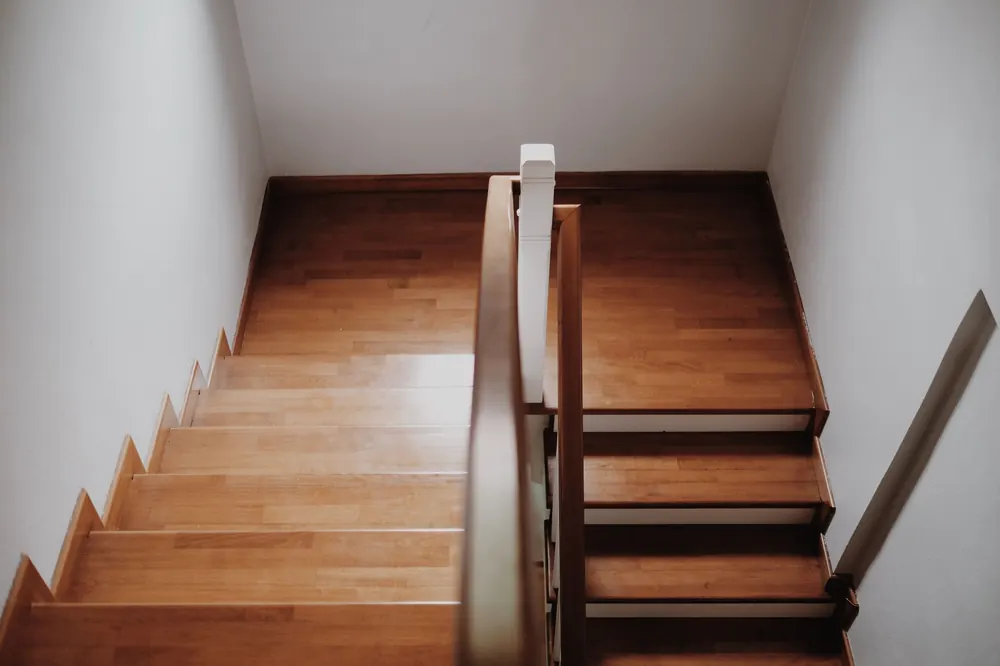
- Protect and prep. Walls, skirt boards and the floors at the top and bottom are masked. Any remaining carpet hardware, staples and tack strips come out.
- Repairs. Loose or squeaky treads are noted, and cracked treads or damaged nosings are flagged for repair or replacement before finishing. (See stair repairs above for what belongs in which job.)
- Sanding. Treads and landings are sanded with edgers and detail sanders, then corners and nosings are scraped and sanded by hand.
- Clean. Dust is vacuumed and the surface is wiped down so the finish bonds cleanly.
- Stain (optional). If you are changing color, stain is applied and allowed to dry. Testing a sample on a tread or a spare board first is a good idea.
- Finish coats. Several coats of finish are applied, with drying time between coats.
- Paint (if part of the scope). Risers and skirt boards are painted after the treads are protected, or before the final coat depending on the plan.
- Cure. Light, careful use comes first. Runners, rugs and heavy traffic wait until the finish has had time to cure.
The full sequence for floors, including what happens day by day, is on the process & timeline page.
Living with a stair that is being refinished
If the stair is your only route between floors, plan for it. Options that are commonly used:
- Alternate-step finishing. Finishing every other tread first, then the rest, so the stair stays usable (carefully) through the job. It takes longer but avoids being cut off from a floor.
- A second stair. Many triple-deckers and older houses have a back stair. If yours does, use it while the front stair is being finished.
- Timing around a trip. If you are away for a few days, that is the simplest schedule of all.
Pets need a plan too: fresh finish and claws don’t mix, and a gate at the top or bottom is often easier than keeping a dog off the stairs by asking.
Finish and sheen for stairs
Water-based and oil-modified polyurethanes are both used on stairs. Water-based finishes usually dry faster with less odor and stay lighter in color, while oil-modified finishes add a warm amber tone. For stairs, many homeowners pick a satin or matte sheen: it hides wear on the nosings and doesn’t look slick. Some finish systems also offer slip-resistant additives. After the job, clean treads with a cleaner recommended for the finish, and skip wax, oil soaps and spray polishes, which can leave a slippery film.
Want a runner? A runner protects the center of each tread from wear and adds grip. If you plan one, the exposed edges can be the main focus of the refinish.
What to send for a stair quote
Use the quote form and choose “Stairs.” In the notes, include:
- How many steps, and whether there are landings or winders
- What is on them now: carpet, finish, paint, or a mix
- Whether risers, skirt boards or rails are painted
- Whether you also want the floors at the top or bottom refinished
- Whether it is a shared stair in a multi-family building
- Whether it is the only stair in the house
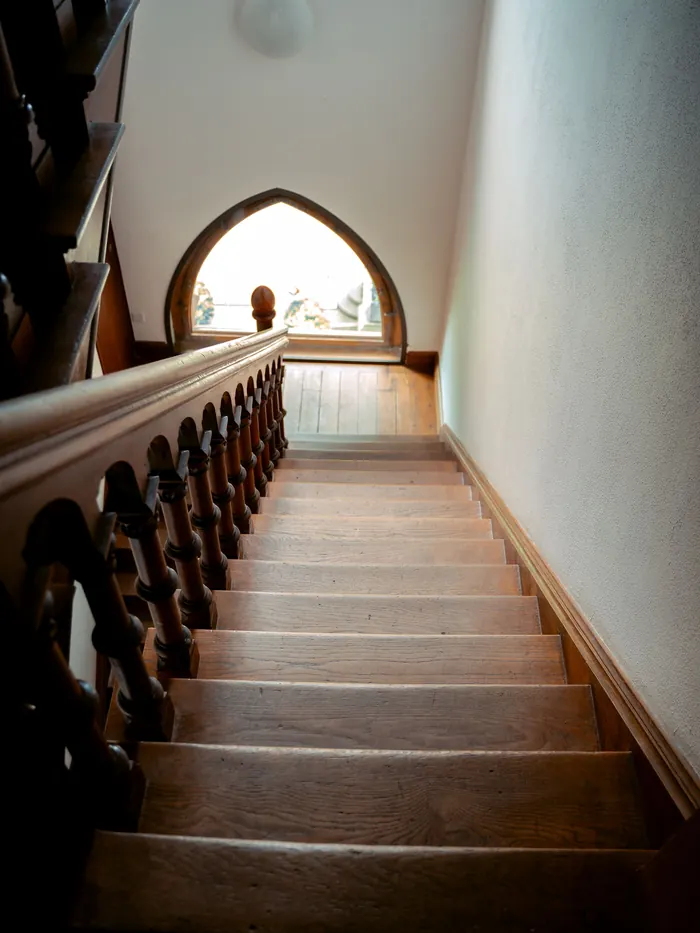
After you submit, reply to our email with a few photos: one of the whole flight, and a close-up of a tread’s front edge. Photos make the reply much more useful.
Related services and areas
Stairs are often done with full hardwood floor refinishing or floor sanding. Common questions are on the FAQ page. Stair refinishing is available in Boston, Cambridge, Somerville, Brookline, Newton, Waltham, Quincy, Framingham, Arlington, Medford, Watertown, Belmont and Needham. Full list: service areas.
Or call (857) 837-1234.
Frequently asked questions
Can stairs be refinished without refinishing the floors?
Yes. Stairs are often done on their own. Bring photos of the floors at the top and bottom so the stain or clear finish can be chosen to sit well next to them.
Can carpeted stairs be refinished?
Often, yes, if the treads underneath are solid hardwood. Staple and tack-strip holes can be filled, and some marks will soften but stay visible. Some stairs were built with plywood or construction-grade treads meant to be carpeted; those usually need new treads, a runner, or new carpet instead.
Can I use my stairs while they are being refinished?
Not normally while finish is drying. If it is the only stair, alternate-step finishing (every other tread, then the rest) can keep it usable with care. Mention it on your quote request.
Will refinished stairs be slippery?
A clean, cured finish is not slippery the way wax or oil soap residue can be. Satin or matte sheens look less slick, and some finish systems have slip-resistant additives. A runner adds grip if you want it.
What about painted risers?
Risers and skirt boards are usually repainted rather than stripped. In homes built before 1978, older paint may contain lead, so tell us about any painted parts and they will be planned for.
How long does a staircase take?
It depends on the number of steps, landings, repairs, stain and the finish system, and on whether rails are included. Expect it to take longer per square foot than open floor because most of the work is by hand. See process & timeline.
Should a squeaky or loose stair tread be fixed before refinishing?
Yes. Fastening a loose tread or quieting a squeak is done before sanding so the repair doesn’t damage new finish. A stair that bounces, sags or has a cracked stringer needs a carpenter first. See stair repairs.
Can one cracked stair tread be replaced to match the rest?
Often, yes, using the same species and thickness as the original. Expect the new tread to look a little different at first, even under the same stain, because the old wood has aged. Matching thickness also keeps riser heights even; Massachusetts code limits riser variation in a flight to 3/8 inch.
Photos are licensed stock and Creative Commons images used as examples. Photo credits