
Wall-to-wall carpet still covers a lot of original hardwood across Greater Boston: mid-century ranches and split-levels, triple-decker bedrooms, older condo conversions, and houses that got carpeted in the 1970s or 1980s and never got uncovered. Finding boards under the carpet is common. Deciding whether they can be refinished, recoated or need board work is the part that needs a careful look before anyone tears everything out.
Prefer to talk it through? Call (857) 837-1234.
Quick answer: should you pull the carpet now?
Usually not yet. Peel back a small section in a closet, behind a door or along a baseboard so you can see the species, how continuous the boards are, and whether old pad glue, vinyl or tile sits underneath. Photograph that corner. Keep the rest of the carpet down until the day work starts; it shields the wood from foot traffic, pets and moving furniture. Full removal of carpet, pad and tack strips is normally part of floor prep once a plan is set.
What homeowners often find under carpet in Greater Boston
Housing age and remodeling waves vary by town, but a few patterns show up repeatedly from Boston and Cambridge out through Newton, Waltham, Quincy and Framingham:
- Solid oak strip
Most mid-century living rooms
Often refinishes well once staples, pad residue and light stains are handled. Continuous runs across rooms sand more evenly as one area.
- Softwood or mixed rooms
Older city houses
Fir or pine in kitchens, back halls and upstairs bedrooms dents more easily and may take stain unevenly. See the fir and pine guide if the boards look soft.
- Engineered or layered floors
Condos and later remodels
A plywood core under a thin hardwood top, or older vinyl/tile under the carpet, changes the plan. Confirm what the top layer is before anyone sands.
One house can mix all three: oak in the front rooms, softer boards toward the kitchen, and a remodeled bath or kitchen where the wood stops and sheet goods begin.
Lift one corner before you commit
- Species and board width. Oak strip, wider pine, or a plywood-faced engineered plank each lead to different sanding and staining approaches. A cut edge beside a floor register or where rooms meet is often clearer than the face of a worn board.
- How far the wood continues. Boards that pass under partition walls usually mean the rooms share one floor. Plywood patches, seams at doorways or a sudden change of species mean those rooms may need different treatment.
- Finish condition under the pad. Carpet sometimes protected finish that still looks decent in the middle of a room while traffic lanes near doorways are bare. That contrast matters for choosing a recoat versus a full sand.
- Anything under the pad besides wood. Older sheet vinyl, 9-inch tile or black adhesive under or beside carpet needs testing before it is scraped or sanded (see asbestos caution below).
- Moisture clues. Soft spots, cupped boards, a musty smell or dark rings near radiators and exterior doors are signs to dry and investigate before sanding.
Tack strips, staples and pad residue
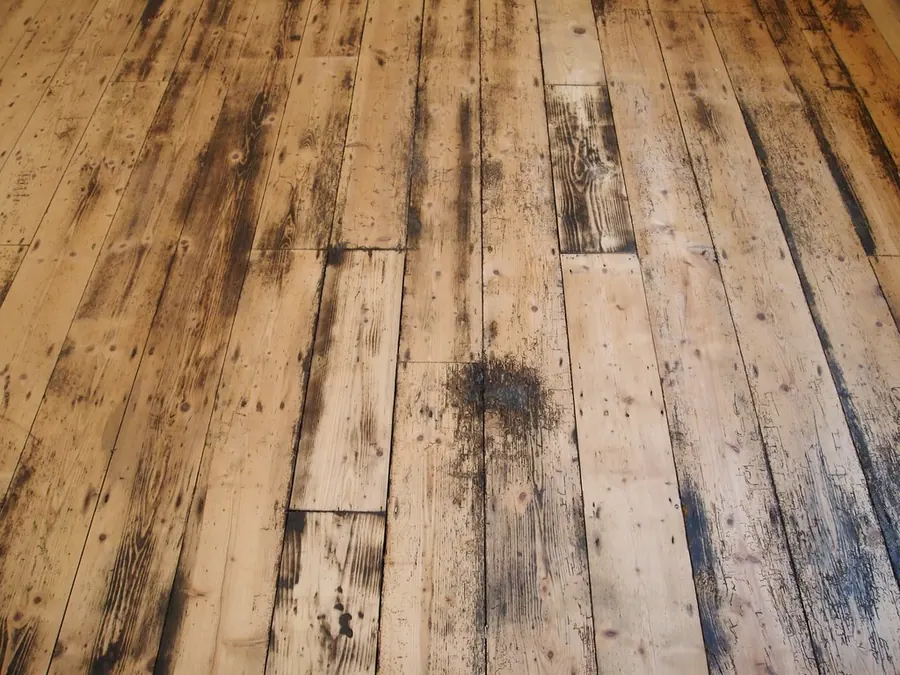
Carpet systems leave hardware and residue that have to come out before sanding. Wood tack strips are usually nailed along the walls; staples hold the pad; some pads were glued. Those fasteners leave a ring of holes near the baseboards, and glued pad can leave sticky or stained spots. Removal is normal prep. What helps a quote is knowing the carpet is still down, roughly how many rooms are covered, and whether you already see heavy glue, painted borders or another floor layer when you peel a corner.
Stains and pet urine under carpet
Pad and carpet can hide years of pet accidents, plant watering and old leaks. Light amber marks in the finish often sand away. Deep black or gray staining that has soaked into the wood may not, and those boards sometimes need replacement rather than more aggressive sanding. The water and pet damage guide walks through drying the floor first, telling surface marks from deeper damage, and when board swaps make more sense than sanding harder.
Asbestos caution: old vinyl, tile or adhesive under the carpet
In many mid-century kitchens and baths, wall-to-wall carpet was laid over older sheet vinyl or tile, or the carpet stops where those materials begin. Some older vinyl products and the black mastics used to stick them down can contain asbestos. Disturbing that material by scraping, sanding or dry tearing it up can release fibers. The EPA guidance on protecting your family from asbestos explains why suspect flooring and adhesive should be tested and, if positive, handled by people trained for that work before floor sanding starts. Do not assume a vinyl layer under carpet is safe to grind off with a floor sander.
Lead caution when tack strips meet painted wood
Pulling tack strips and scraping along baseboards can chip or grind old paint on the wood trim and on painted floor borders. Homes built before 1978 may have lead-based paint on those surfaces. Paid renovation work that disturbs that paint follows the EPA lead renovation (RRP) rules. Mention painted baseboards, borders, thresholds or risers when you request a quote, and avoid dry-sanding unknown paint yourself while clearing carpet.
Leave the carpet down until work day
Once you have photos of a lifted corner, put the flap back. Carpet still in place keeps grit, pet claws and moving boxes off the boards, and it avoids a week or two of bare, unfinished wood underfoot while you schedule the job. On the start date, carpet, pad and tack strips come up as part of prep, then repairs, sanding or recoating follow the plan you already agreed on. If you are selling, the same idea applies: uncover only enough to photograph for a quote, then time full removal with the refinishing schedule so the house is not left with raw floors during showings. The before-selling guide covers sequencing floors with paint, staging and listing photos.
After the carpet is gone: recoat or full refinish?
With the boards visible, the choice is the same as on any uncovered floor. If the finish is worn but still continuous and the wood itself is not gray or deeply scratched, a screen and recoat may restore the sheen without cutting into the wood. Wear through to bare wood, cupping, heavy staple fields that need filling, color changes you want, or stain that has soaked in usually point to full sanding and refinishing. Staple holes along the walls are routine; large glued patches, replaced plywood sections or missing boards get scoped as repairs first.
Solid hardwood vs engineered under carpet
Not every “hardwood look” under carpet is solid strip. Some condo units and later additions have engineered planks: a thin hardwood face bonded to a layered core. Those can sometimes be sanded, sometimes only recoated, and sometimes only replaced, depending on how thick that face is and how the floor is attached. The engineered hardwood guide shows how to read a plank edge and what the realistic options are. If you are unsure, say so on the quote form and include a clear photo of a plank end at a vent or transition.
Photos that help a quote when carpet is still down
Use the quote form and choose “Not sure” if you do not yet know whether the floor should be recoated, sanded or partly replaced. In the notes, list the rooms still covered, the town and building type (single-family, two-family, condo), and anything you already saw under a lifted corner. After you submit, answer the confirmation message with:
- One room-width photo of every carpeted space from the doorway.
- One peeled corner showing the boards (closet or wall edge is fine).
- Close-ups of dark stains, soft spots or obvious glue/vinyl layers.
- A plank-edge photo at a vent or doorway transition if you can lift enough to see it.
- Stairs if they are carpeted too, from the bottom looking up.
- Any painted borders or baseboards next to the tack strip.
Or call (857) 837-1234.
Related guides and areas
City pages across the service area note carpeted oak often, including Framingham, Waltham, Newton, Quincy and Boston. For softwood under old coverings see the fir and pine guide; for shared buildings see the condo checklist. The FAQ and process page cover schedules, finish smell and whether you can remain in the house during the work.
Frequently asked questions
Should I tear out wall-to-wall carpet before getting a floor quote?
No. Lift a small corner for photos, then leave the carpet in place. Full removal is normally done at the start of the job so the boards stay protected until prep begins.
Can hardwood that was under carpet for decades still be refinished?
Often yes, especially solid oak strip from mid-century homes. Staple holes, pad residue and light staining are common and expected. Deep black pet or water stains, soft spots or a second floor layer underneath can change the scope.
What if there is vinyl or tile under the carpet too?
Stop and have suspect vinyl, tile or black adhesive tested before scraping or sanding. Some older products and mastics can contain asbestos; the EPA asbestos page linked above explains why testing comes first.
Will staple holes and tack-strip damage show after refinishing?
Small fastener holes along the walls are filled and sanded as part of normal prep. Large missing chunks, plywood patches or wide glued areas may need board repair or replacement so the finished floor looks even.
Is a screen and recoat enough after carpet comes up?
Sometimes, when the finish is dull but still intact and the wood is not worn through. If traffic lanes are bare, gray or deeply scratched, or you want a color change, a full refinish is the usual route.
What if the floor under the carpet is engineered, not solid?
Engineered planks need a wear-layer check before anyone plans a full sand. Some can be lightly sanded, some only recoated, and thin products may need plank replacement instead. Send a board-edge photo with your quote request.
Photos are licensed stock and Creative Commons images used as examples. Photo credits