
Floor sanding is the stage of a refinish that takes a hardwood floor back to clean, flat bare wood so a new finish can bond and wear evenly. Done well, it removes only as much wood as the floor needs. Here is what sanding involves, when a floor needs it, how dust is handled, how to prepare, and what older Greater Boston floors add to the job.
Prefer to talk it through? Call (857) 837-1234.
Quick answer: what floor sanding involves
A full sanding is several passes, not one. A large sander removes the old finish and flattens the boards, an edger reaches along the walls, and each area is sanded again with finer abrasive until the scratches are small enough to disappear under stain and finish. The floor is then vacuumed and inspected before stain (optional) and finish coats go on, with light buffing between coats. Sanding alone leaves bare, unprotected wood, so it is almost always part of a full hardwood refinish.
The sanding sequence, step by step
Exact grits and machines vary with the wood, its condition and the finish planned, but most full sandings follow this order.
- Step 1
Prep and repairs
Rooms cleared, vents and doorways sealed, loose boards fastened, and nails or staples set below the surface.
- Step 2
Coarse cut
A large sander removes the old finish and flattens uneven boards, starting as fine a grit as the floor allows.
- Step 3
Edges and corners
An edger sands along the walls; corners, toe-kicks and radiator pipes are scraped or detailed by hand.
- Step 4
Finer grits
Field and edges are re-sanded with finer abrasive, each grit removing the scratches of the last.
- Step 5
Blend and inspect
A multi-disc or buffer blends field and edges; the floor is vacuumed and checked in raking light.
- Step 6
Buff between coats
Between finish coats, a fine screen or pad smooths raised grain and dust nibs so the next coat bonds, as the finish system requires.
Skipping a grit, or jumping from very coarse to very fine paper, leaves swirls and lines that look fine on bare wood but show clearly once stain or finish goes on.
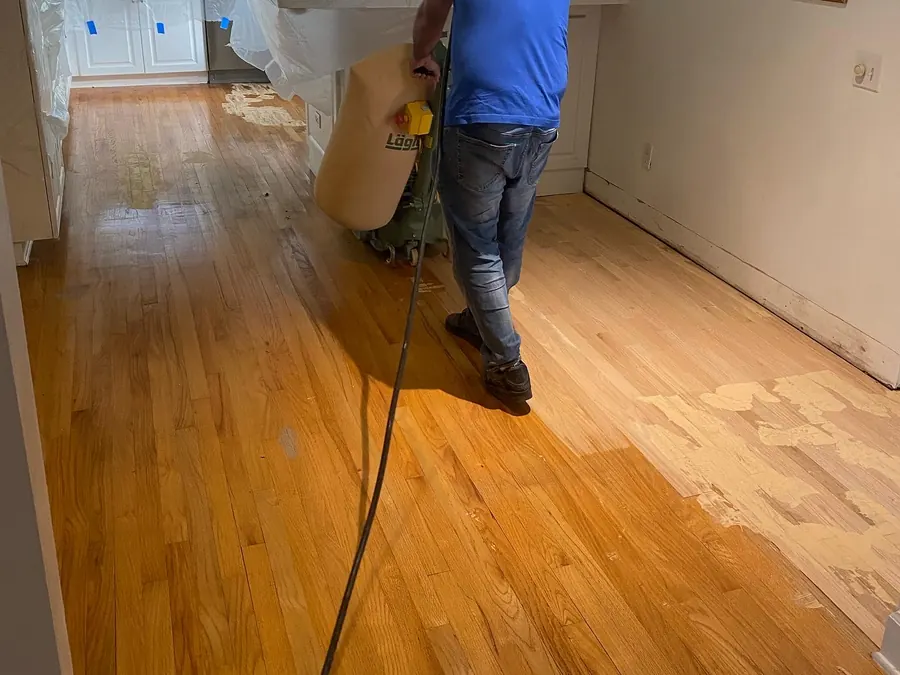
Drum, multi-disc and orbital sanders: what’s the difference?
- Drum and belt sanders make the first, fast cuts on most strip and plank floors. The same power means they can gouge if misused or paused in one spot.
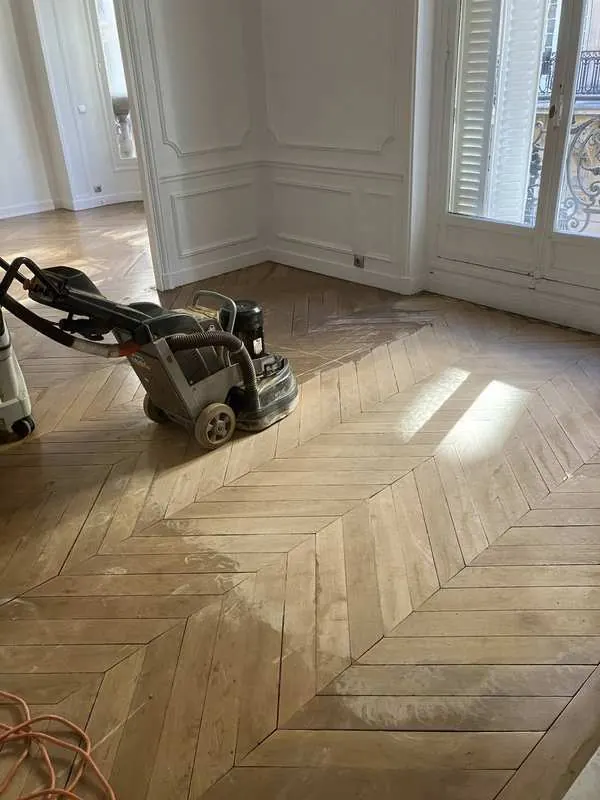
- Multi-disc (planetary) sanders cut less aggressively. They blend drum and edger marks and suit patterned floors such as parquet and floors with little wood to spare.
- Orbital and square-buff sanders are slower; they handle final smoothing, light sanding and buffing between coats.
- Edgers, detail sanders and scrapers handle edges, corners, closets and stairs.
Does your floor need a full sanding?
Not always. When the finish film is still whole and the wear is mostly surface haze and fine scratches, a screen and recoat can often refresh it and saves wood for later. Full sanding usually makes sense when you see:
- Gray or bare wood in traffic lanes where the finish has worn through
- Scratches or pet marks deep enough to catch a fingernail
- Stains in the wood, peeling finish, or wax a new coat won’t bond to
- A wanted color change, such as going lighter or removing an old amber tone
Floor sanding vs buffing vs “sandless” refinishing
These three terms are used for very different jobs, which makes quotes hard to compare. The real difference is what each one removes: wood, a thin skin of the old finish, or little more than surface grime. Only sanding reaches the wood itself.
| Job | What it removes | What it can fix | What it can’t fix |
|---|---|---|---|
| Full floor sanding | Every layer of old finish plus a sliver of wood, down to bare boards | Gray worn-through lanes, deep scratches, stains in the wood, uneven boards, a color change | Boards already sanded close to the tongue; rot or moisture coming from below |
| Buffing (screen and recoat, buff and coat) | A light scuff of the existing finish; the wood is not touched | Haze, dullness and fine surface scratches while the finish is still intact | Bare or gray wood, deep scratches, stains, any change of color |
| “Sandless” refinishing (chemical abrasion) | Grime and a microscopic layer of finish, using a liquid etching product and pads instead of an abrasive screen | About the same as buffing: a dull, lightly scratched finish that is still whole | Everything buffing can’t fix; wax or polish residue can also stop the new coat from bonding |
Reading a quote that uses these words
- Ask whether the floor goes to bare wood. If not, the job is a recoat of some kind, whatever name it carries, and the wood color will stay about the same.
- Ask what happens to the worst spots. Gray traffic lanes and scratches that catch a fingernail are in the wood, so a method that never sands the wood can only coat over them.
- Ask about adhesion on waxed, polished or factory-finished floors. Retail “restorer” and polish products leave a film that new finish may not stick to, and prefinished boards often carry a hard factory coating; a small test area settles it before the whole floor is coated.
A buff and recoat done while the finish is still whole often pushes full sanding years down the road, which saves wood for later. The screen and recoat guide walks through how that job runs, and the finish, sheen and stain guide covers what goes on afterward. Not sure which one your floor needs? Send photos for a recommendation, including a close-up of the most worn area.
How many times can a floor be sanded?
There isn’t a fixed number; what matters is how much wood is left above the tongue. Solid hardwood can usually be sanded several times over its life when each sanding is kept light, though floors sanded hard in the past may have less left than they appear to.
Engineered flooring has a real-wood wear layer over a plywood or composite core, and that layer varies widely: some takes one or more sandings, some is too thin to sand at all. A board edge at a floor register or threshold usually shows the layers, and a clear photo of it is one of the most useful things to send with a quote request.
Dust control, in plain terms
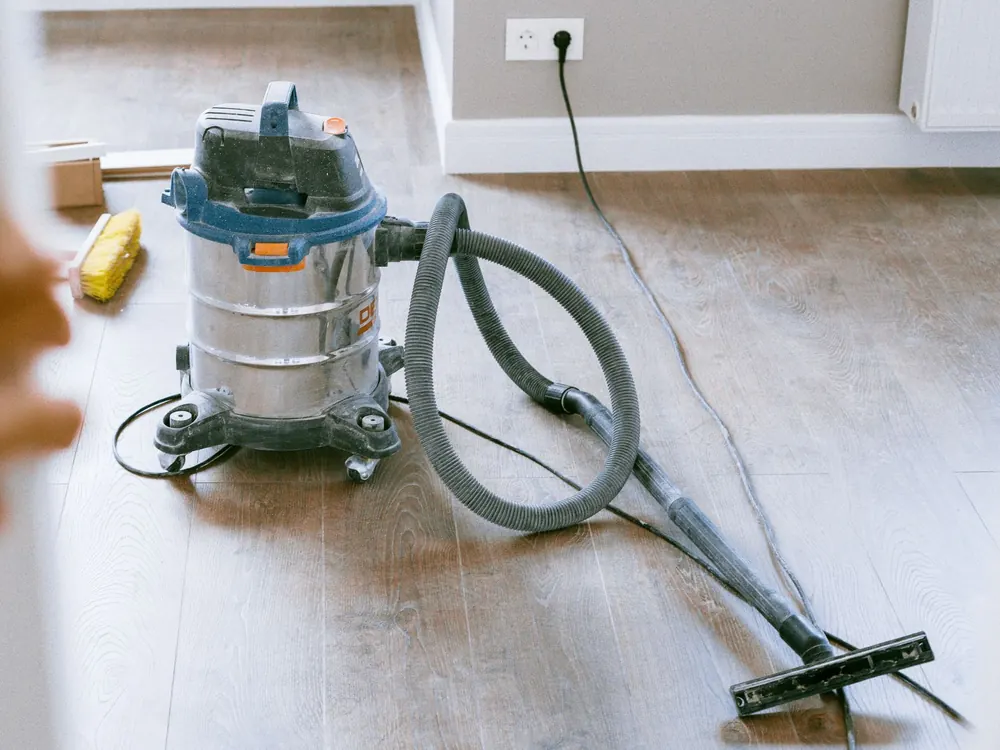
Sanding makes fine wood dust. Vacuum-assisted equipment, sometimes with HEPA filtration, captures much of it at the machine, and containment helps further: plastic over doorways, sealed vents and the HVAC off while sanding.
That reduces dust; it does not eliminate it. Edging, corners and cleanup still release some, which can settle in nearby rooms. Read any “dustless” claim as “less dust”, and ask what equipment and containment will be used.
Getting the house ready for sanding
- Clear the rooms: furniture, rugs, plants and anything on closet floors included in the job.
- Fragile items: sanding vibrates walls, so take down glass, mirrors and art nearby.
- Pets and kids: plan a closed-off space or somewhere else to be until the finish dries.
- Noise: sanders are loud most of the day; working from home nearby is hard.
- Trim and thresholds: some quarter-round may come off and go back; discuss thresholds up front.
Sanding older Boston-area floors
Many homes here have floors a century old or more, which need a lighter, more careful sanding:
- Fir and pine: softer than oak, so they sand away faster; many owners keep some character marks. See the fir and pine guide.
- Face-nailed boards: every nail head is set below the surface first; some boards need re-fastening.
- Gaps: old boards move with the seasons; filler helps small gaps but may crack out of wide ones.
- Parquet: the grain runs in many directions; see parquet floor refinishing.
- Stairs: mostly small tools and hand work; see stair refinishing.
Lead paint and old adhesive: test before sanding
In homes built before 1978, paint on floors, borders or baseboards may contain lead, and sanding it creates lead dust. Mention any paint on or next to the floor; the EPA Renovation, Repair and Painting (RRP) program explains the lead-safe work practices that apply to older homes.
Pulling up carpet or old tile? Some older black flooring adhesives (mastic or cutback) and floor tiles contain asbestos. Intact, they are not normally a hazard, but test them before anyone scrapes or sands. See the EPA’s guide to protecting your family from asbestos exposure.
Sanding in a condo or multi-family building
Sanding noise carries through shared floors and walls, so buildings often set work hours and may require notice, a certificate of insurance or an elevator booking. Engineered floors are common in newer condos, so the wear-layer check matters. The condo floor refinishing checklist covers approvals and logistics in detail.
How long it takes and when you can use the floor
Sanding comes first, then stain (if any) and several finish coats with drying time between them. Total days depend on size, repairs, stairs, stain and finish system; water-based finishes generally dry faster than oil-modified. Foot traffic, furniture and rugs return in stages because finish keeps curing after it feels dry. For how a typical job runs day by day, see process and timeline.
What to send for a quote
Use the quote form. In the notes, list the rooms, solid or engineered (if known), carpet still down, stairs, pets, paint near the floor, building rules and timing. Then reply to our email with photos: each room, the worst wear, and a board edge at a register.
Or call (857) 837-1234.
Floor sanding across Greater Boston
If you are looking for hardwood floor sanding near you, the service areas page lists every community covered, including Boston, Cambridge, Somerville, Brookline and Newton, with notes on local floors. More answers are on the FAQ.
Frequently asked questions
How many times can a hardwood floor be sanded?
It depends on how much wood is left, not on a set number. Solid hardwood can usually be sanded several times over its life, because each careful sanding removes only a thin layer above the tongue. Engineered flooring is limited by its top wear layer: some can take one or more sandings, and some is too thin to sand at all. Checking a board edge at a floor register or threshold shows what is there.
Is dustless floor sanding really dust-free?
No. “Dustless” is a marketing term. Vacuum-assisted sanders and dust containment capture much of the dust at the machine and cut down what spreads through the house, but fine dust still comes from edging, corners and cleanup. Plan on sealed doorways and vents and some wiping down afterward.
Do my floors need a full sanding or just a screen and recoat?
When the finish is unbroken and only hazy or finely scratched, a screen and recoat is often the better fit. Bare gray wood in traffic lanes, deep scratches, stains in the wood, peeling finish or a wanted color change usually mean full sanding.
What should I move out before floor sanding?
Everything off the floor in the rooms being sanded, including rugs, plants and items in closets that are part of the job. Take down fragile wall art near the work, and plan where pets, kids and furniture will go for the whole stretch of sanding and finishing, not just sanding day.
Should I rent a drum sander and do it myself?
You can, but a drum sander removes wood quickly and can leave gouges or waves in seconds if it pauses in one place, and those marks show under finish. On thin engineered floors, old softwood or parquet, the margin for error is small. If you are unsure, send photos and ask before you rent.
Can old fir, pine or face-nailed floors be sanded?
Often, yes, with a lighter approach. Softwood dents and sands away faster than oak, and face-nailed boards need every nail set below the surface first. Paint, old patches and wide gaps are common in older Boston-area homes. See the fir and pine floor guide.
Is floor buffing the same as floor sanding?
No. Buffing, also called a screen and recoat, only scuffs the existing finish so a fresh coat can bond; the wood underneath is not touched. Sanding takes off the full finish and a little wood beneath it, which is what it takes to fix gray worn areas, deep scratches, stains or a color change.
Does sandless floor refinishing work?
On a floor whose finish is still whole and only dull or finely scratched, chemical-abrasion “sandless” systems can work much like a buff and recoat. They don’t reach the wood, so they can’t remove gray wear, deep scratches or stains, or change the color, and wax or polish residue has to be dealt with first or the new coat may not bond.
Photos are licensed stock and Creative Commons images used as examples. Photo credits