
A screen and recoat (also called a screen and coat, or buff and coat) renews only the clear protective finish on a hardwood floor: the existing finish is lightly abraded, cleaned, and given fresh coats, and the wood underneath is not sanded. Refinishing means a full sand and refinish: the old finish is sanded off down to bare wood, stain can be changed, and a new finish system is built from scratch.
So the core difference between recoating and refinishing hardwood floors is depth. Recoating works on the finish layer and keeps the current color; refinishing goes into the wood and can remove wear, deep scratches and old color. A tired floor does not always need the heavier job. Below: how to tell which your floor needs, which floors cannot simply be recoated, and what to expect in an older Greater Boston home or condo.
Not sure which one you need? Call (857) 837-1234 or send photos for a recommendation.
Recoating vs refinishing: quick answer
If the wear is only in the finish, a recoat is usually enough. If the wear has reached the wood, or you want a new color, the floor needs a full refinish.
| What you see | Likely path |
|---|---|
| Dull, hazy or lightly scratched finish; wood color even; water still beads | Often screen & recoat |
| Exposed, graying wood along walkways, deep scratches, or a wanted stain change | Usually full refinish (sand to bare wood) |
| Black water stains, cupping, soft spots, or boards already sanded thin | May need repair or replacement first |
| Waxed, polished or factory-finished floor | Test adhesion before choosing |
Side by side, the two jobs compare like this:
| Compared | Screen and recoat | Full sand and refinish |
|---|---|---|
| What it works on | The existing finish layer only | The finish and the top of the wood |
| Sanding | Light abrasion of the old finish with a buffer screen or pad | Sanding through a sequence of grits to bare wood |
| Color | Stays essentially the same (sheen can change) | Can change: natural, stain, lighter or darker |
| Scratches and wear | Evens out fine scratches in the finish | Removes wear and scratches that reach the wood |
| Wood removed | None | A thin layer each time, so a floor has a limited number of sandings |
| Dust, noise and time | Less of each; no heavy sanding phase | More; sanding adds time before any finish goes on |
| Main limits | Needs sound, clean finish that a new coat can bond to (not wax) | Needs enough wood left above the tongue or wear layer |
What a screen and recoat actually is
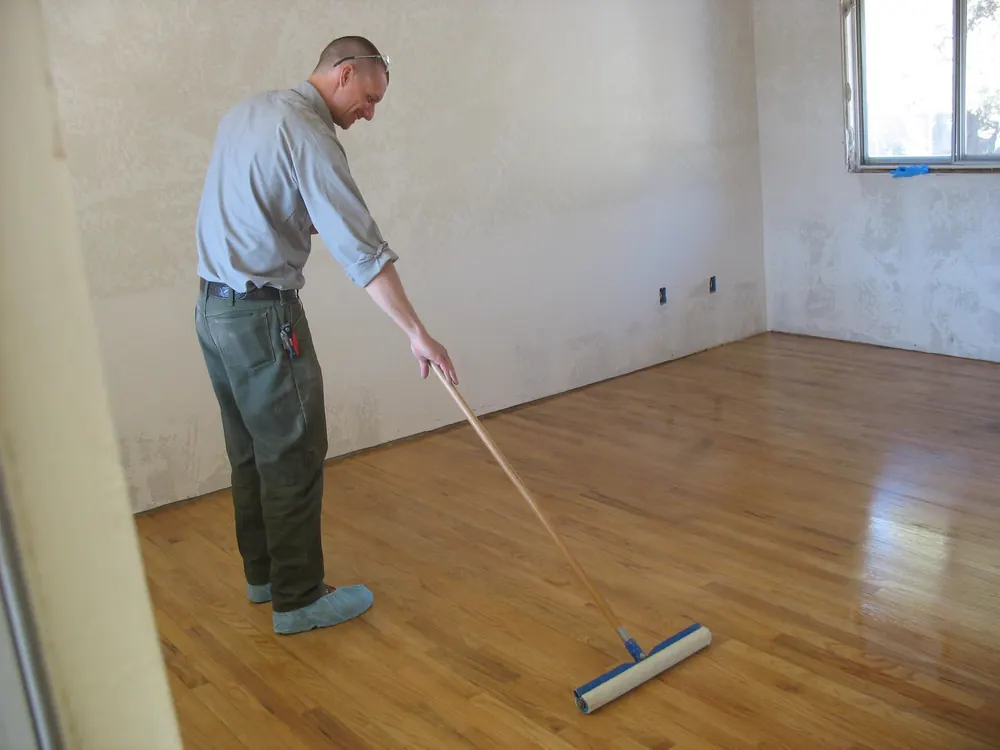
A screen and recoat (also called a buff and coat) works only on the finish layer. The floor is cleaned thoroughly, then a buffer with a fine abrasive screen or pad scuffs the existing finish so the new coat has something to grip. The dust is vacuumed and tacked off, and one or more fresh coats of clear finish go on. Products sold as “sandless refinishing” work on the same principle with a liquid etcher in place of the screen; the floor sanding page compares sanding, buffing and sandless options.
The wood itself is not sanded, which is why a recoat is quicker, quieter and much less dusty than a full refinish, and why it saves wood for the future. It also means a recoat cannot change the color or remove damage that is in the boards.
What a full sand and refinish involves
A full refinish sands through the old finish into fresh wood with a sequence of grits, fixes what sanding reveals, applies stain if you want a new color, and builds a new finish system from scratch. It is the fix for worn-through or damaged floors and the only way to change color. The floor sanding guide explains the sanding stage, and hardwood floor refinishing covers the whole service.
Which does your floor need? Six signs
Look at the floor in daylight, standing low so light skims across the boards. The busiest paths, such as doorways, the kitchen and the hall, show the real condition.
- Often a recoat
Wear only in the finish
The floor looks dull or hazy and has fine surface scratches, but the wood color is even and water still beads on it.
- Full refinish
Gray or bare wood
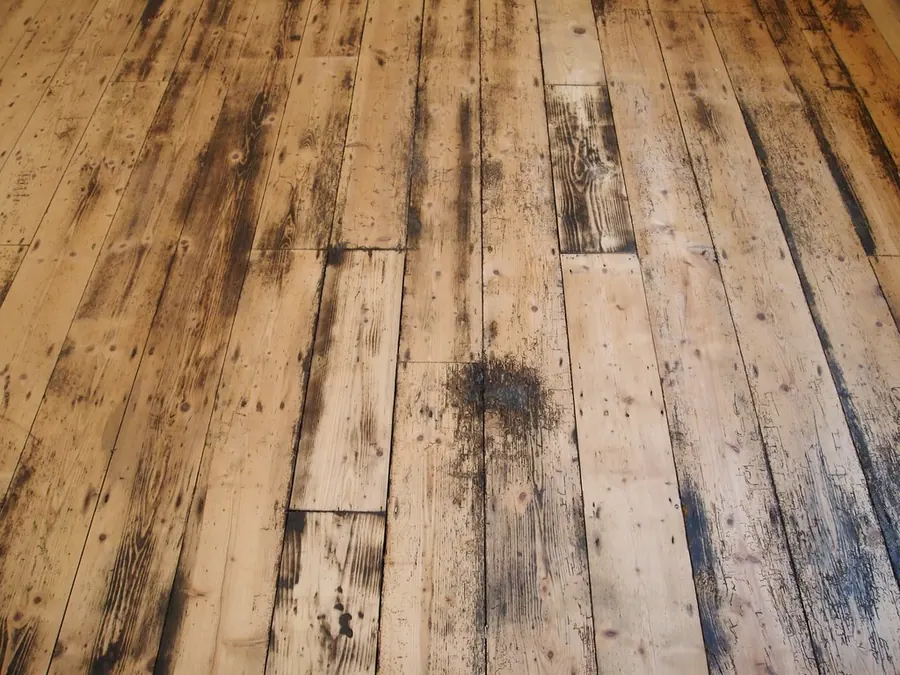
Paths where the finish is gone and exposed boards have turned gray or dark. A new topcoat would seal the discoloration in.
- Full refinish
Deep gouges and dents
Scratches that catch a fingernail, pet claw marks into the wood, or dents. A recoat fills tiny scratches in the film, not damage in the boards.
- Full refinish
A color change
Going lighter, darker, gray or removing an amber tone requires bare wood. Recoating keeps the existing color.
- Repair first
Water or pet damage
Black stains, cupped or lifting boards and soft spots point to moisture. The cause and the damaged boards come before any finish work; see the water and pet damage guide.
- Test first
Wax, polish or factory finish
Waxed floors, floors treated with polish or “restorer” products, and prefinished floors need an adhesion check before a recoat.
Checks you can do at home
Try these in a worn walkway and again in a protected spot, such as a closet, for comparison.
- Water-drop test: place a few drops of water on a worn area. Beading means finish is still there. If the water soaks in and darkens the wood within a minute or so, the finish has worn through in that spot.
- Fingernail test: run a fingernail across the worst scratches. If it glides over, the scratch is likely in the finish; if it catches, it is probably in the wood.
- Raking light: a flashlight held flat to the floor shows whether the scratches and dull areas sit on top of the finish or the wood itself has turned gray.
- Wax check: in an out-of-the-way corner, scrape lightly with a coin or fingernail. A soft, waxy smear, or a floor that was polished with paste wax in the past, is a red flag for recoating.
- Product history: think back to what has been used on the floor. Mop-on polishes, shine “restorers”, silicone-based or oil-soap cleaners can leave residue that keeps new finish from bonding.
Floors that may not take a recoat
A recoat only works if the new coat sticks to the old one. Poor adhesion can show up as peeling or flaking, sometimes weeks later, and the usual fix then is a full sanding. These floors need extra care:
- Waxed floors: finish generally will not bond over wax, and the wax soaks into the wood, so waxed floors are usually sanded to bare wood instead.
- Polish and “restorer” residue: some can be removed with a specialist cleaner before a recoat, some cannot. Say which products you have used.
- Factory-finished (prefinished) floors: many engineered and some solid prefinished floors have a very hard finish, often with aluminum oxide in it. It can need special abrasion or a bonding product, and an adhesion test in a hidden spot first.
- Peeling or flaking finish: a new coat cannot hold down finish that is already letting go.
An adhesion test is simple: a small hidden area is prepared and coated, allowed to dry, then checked to see whether the new coat holds or lifts.
How recoating fits into a floor’s life
Every full sanding removes some wood, so the more often a floor can be refreshed with a recoat instead, the longer it lasts before it runs out of sandings. The key is timing: recoat while the finish is still whole but looking worn, not after traffic lanes have reached bare wood. Once the wood is exposed, it starts to gray and stain, and the choice is made for you.
There is no universal schedule. Pets, grit from outside, kitchens and entry halls wear finish faster; felt pads, doormats and damp-dry cleaning help a fresh coat last.
Time, drying and living at home
A recoat usually means less time with rooms out of use than a full refinish because there is no sanding phase, but the finish still needs to dry and cure. Expect to keep off the floor until it is ready for light foot traffic, then bring back furniture and rugs in stages, following the guidance for the specific finish used. Odor depends on the product. See the process and timeline guide for how drying and cure are planned.
Older Boston-area floors
Century-old floors in Boston, Cambridge, Somerville and the older suburbs raise their own recoat questions:
- Fir and pine: soft woods dent easily. A recoat protects them but will not remove dents or deep wear, which is often part of their character. More in refinishing fir and pine floors.
- Unknown old finishes: decades of shellac, varnish, wax or mixed products are common. If no one knows what is on the floor, an adhesion test comes before any recoat.
- Floors sanded many times: a recoat is a good way to protect what wood is left, if the finish is still intact.
- Parquet: patterned floors often suit a recoat, since sanding across mixed grain is slower; see parquet floor refinishing.
Condos and multi-family buildings
Because there is no heavy sanding, a recoat is usually easier on neighbors, which helps in condo associations and triple-deckers. Buildings may still ask for notice, approved work hours, a certificate of insurance, elevator protection, or ventilation planning for finish odor in shared hallways. Newer condos often have engineered floors with factory finishes, which brings the adhesion question up. The engineered hardwood refinishing guide covers wear-layer thickness and when a recoat is the safer option. For association approvals, scheduling and building logistics, use the condo floor refinishing checklist.
What to send for a quote
Fill in the quote form with the rooms, rough size, solid or engineered (if known), stairs, pets, any wax or polish products used, building rules and your timeline. When our email arrives, reply with pictures: every room from the doorway, the most worn walkway up close, the worst scratches, and the water-drop result if you tried one. Those photos usually settle the recoat-or-refinish question.
Or call (857) 837-1234.
Screen and recoat across Greater Boston
Recoat and refinish requests are welcome from Boston, Cambridge, Somerville, Brookline, Newton and the other towns on the service areas list. For stairs, see stair refinishing; more answers are on the FAQ.
Frequently asked questions
Can a screen and recoat remove scratches?
It hides very fine scratches that sit in the top of the finish, and the fresh coat evens out the sheen. Scratches that catch a fingernail, gouges and dents are in the wood itself, and a recoat cannot take them out; sanding or a board repair does that.
Can you recoat a waxed hardwood floor?
Generally not. Finish does not bond reliably over paste wax, and wax works into the wood pores, so the usual answer for a waxed floor is a full sanding to bare wood. Mention any wax, polish or “restorer” product in your quote request so the right test can be done first.
Can engineered or prefinished floors be screened and recoated?
Often, but factory finishes are hard and slick, so they may need special abrasion or a bonding product, and an adhesion test in a hidden spot is wise. Check the flooring maker’s care guidance if you have it. On engineered floors with a thin wear layer, recoating can be the better way to refresh them.
Will a screen and recoat change the color of my floor?
No. A recoat adds clear finish over the existing finish, so the color stays essentially the same, though a different sheen can change how the floor reads in daylight. Any stain change means sanding to bare wood as part of a full refinish.
How do I know if my floor finish is worn through?
Put a few drops of water on the most worn part of a traffic lane. If they bead up, there is still finish there. If they soak in and darken the wood quickly, the finish is worn through in that area, and a recoat alone will not fix it.
How often can a floor be recoated?
There is no fixed schedule. Busy hallways, kitchens, pets and grit wear finish faster than a quiet bedroom. The useful rule is to recoat while the finish is dull but still whole, before traffic lanes reach bare wood, since that keeps more wood for future sandings.
Photos are licensed stock and Creative Commons images used as examples. Photo credits