
A typical full refinish is a multi-day project, and most of that time is not sanding: it is drying between coats and letting the finish cure. How long yours takes depends on square footage, stairs, repairs, whether you stain, the finish system, and indoor humidity. Screen & recoat jobs are often shorter; the screen and recoat vs full refinish guide explains which one a floor needs. This guide covers what each stage involves, whether you can stay home, and when furniture, rugs and pets can come back.
Questions about timing? Call (857) 837-1234.
Quick answer: how long refinishing takes
Plan for several days of limited access for a full sand and refinish, sometimes longer for a whole house, stairs or a stain color, and fewer for a screen and recoat. Within that, the floor goes through three phases: sanding (noisy, some dust), coating (quiet, strongest odor, rooms closed), and curing (you are using the floor again, carefully). Ask for a written plan that shows when each room is closed and when it reopens.
A full refinish, stage by stage
The order rarely changes, though how long each stage lasts depends on the house, the wood and the products chosen.
- Before work
Walk-through and prep
Rooms are emptied, repairs and loose boards are flagged, and doorways, vents and built-ins are covered. Agree here on which rooms are off limits and when.
- Sanding
The loudest, dustiest stage
The old finish is sanded off in passes with progressively finer grits, edges and corners are detailed, and the floor is vacuumed. Larger or damaged floors take longer.
- Repairs
Fill, patch and final pass
Gaps, nail holes or replaced boards are filled or patched, then blended in so repairs show as little as possible under the finish.
- Optional
Stain and samples
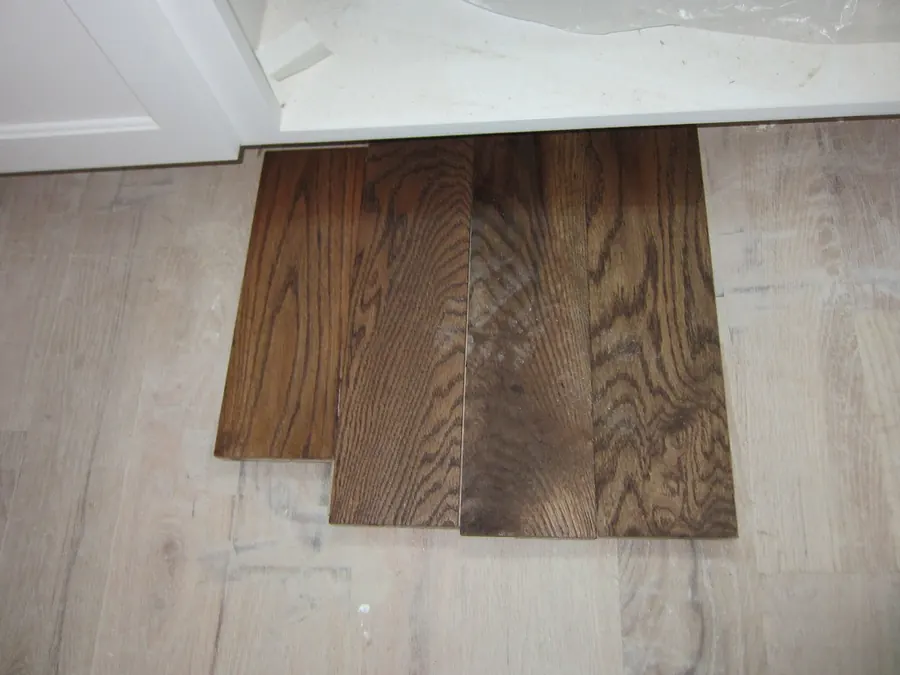
If you want a new color, samples go down on your own boards first. Stain then needs to dry before any clear coat goes on, which adds time.
- Coating
Clear finish coats
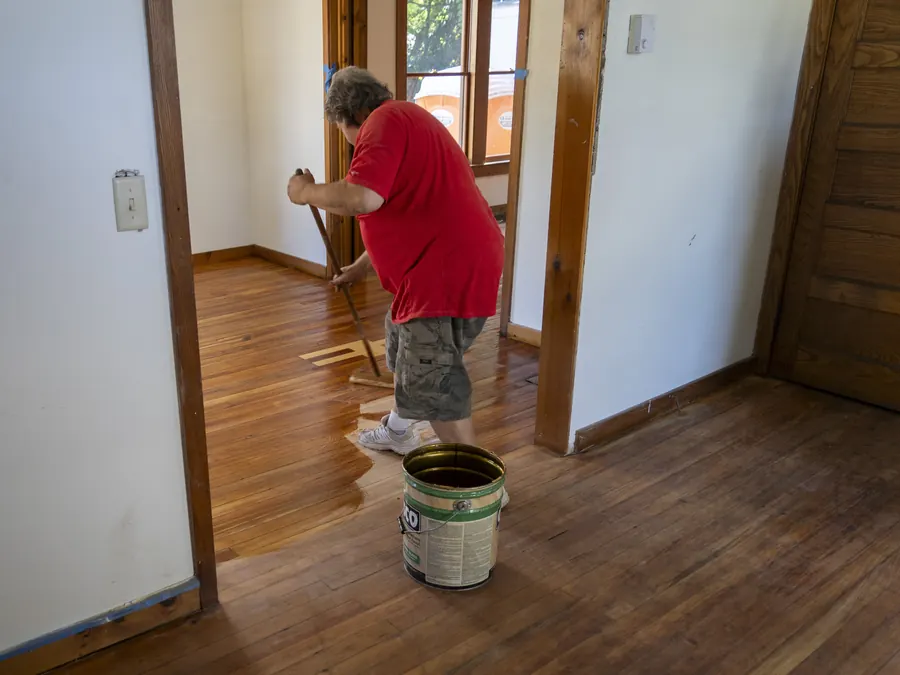
Several thin coats are applied, with drying and a light buff between them. This stage is mostly waiting, and odor is strongest now.
- After
Cure and move-back
The floor is walkable before it is fully hard. Furniture, then rugs, return in stages as the finish keeps curing.
For the sanding stage in detail, including grit sequence and machines, see hardwood floor sanding. The whole service is described on hardwood floor refinishing.
What makes a refinish take longer
- Size and layout: one open room is quicker than many small rooms, closets and hallways, each with edges to detail.
- Stairs: treads and risers are mostly hand work and can add more time than their square footage suggests; see stair refinishing.
- Repairs: loose or damaged boards, pet stains and board replacements are handled before the final sanding pass.
- Stain: samples, application and stain drying time come before the first clear coat.
- Finish system: water-based finishes often allow shorter waits between coats; oil-modified finishes usually need longer. The number of coats matters too. See the guide to water-based vs oil-based finish, sheen and stain.
- Weather inside the house: damp, humid summer air and chilly rooms slow drying, while very dry winter heat changes how the wood and finish behave. Keeping the heat or air conditioning running steadily helps.
- Building rules: condo work hours, elevator bookings and notice periods can stretch the calendar even when the work itself is the same.
Can you stay home during floor refinishing?
Many people do, especially when only part of the house is being done. It works best when you can live, sleep, cook and get to a bathroom and an outside door without walking across the work area. Two parts of the job are harder to live with: sanding days, which are loud and send some dust past even good containment, and coating days, when rooms are closed while finish dries and odor is at its peak.
A short stay elsewhere, even just for the coating days, tends to make sense when:
- the whole first floor or the whole house is being done at once;
- the only route to the kitchen, bathroom or front door crosses the floors being finished;
- someone in the household is sensitive to odor, or you are using an oil-modified finish;
- you have pets that will be stressed by noise or are hard to keep out of closed rooms.
Splitting a larger job into phases, for example bedrooms first and living areas second, is another way to stay home, though it usually means more days overall. The finish odor and ventilation advice is product-specific, so follow the label and the plan for your job. This is comfort planning, not medical advice.
What “dustless” sanding really means
Sanders connected to strong vacuum extraction with HEPA filters, plus plastic over doorways and taped vents, keep most dust out of the air and off the rest of the house. That is a real improvement, and it is what “dustless” or “dust-free” marketing usually refers to, but no sanding method is truly dust-free. Edging and hand-scraping release some fine dust. Expect less dust, not none, and still clear or cover things in nearby rooms. More on dust control during sanding.
When furniture, rugs and pets can come back
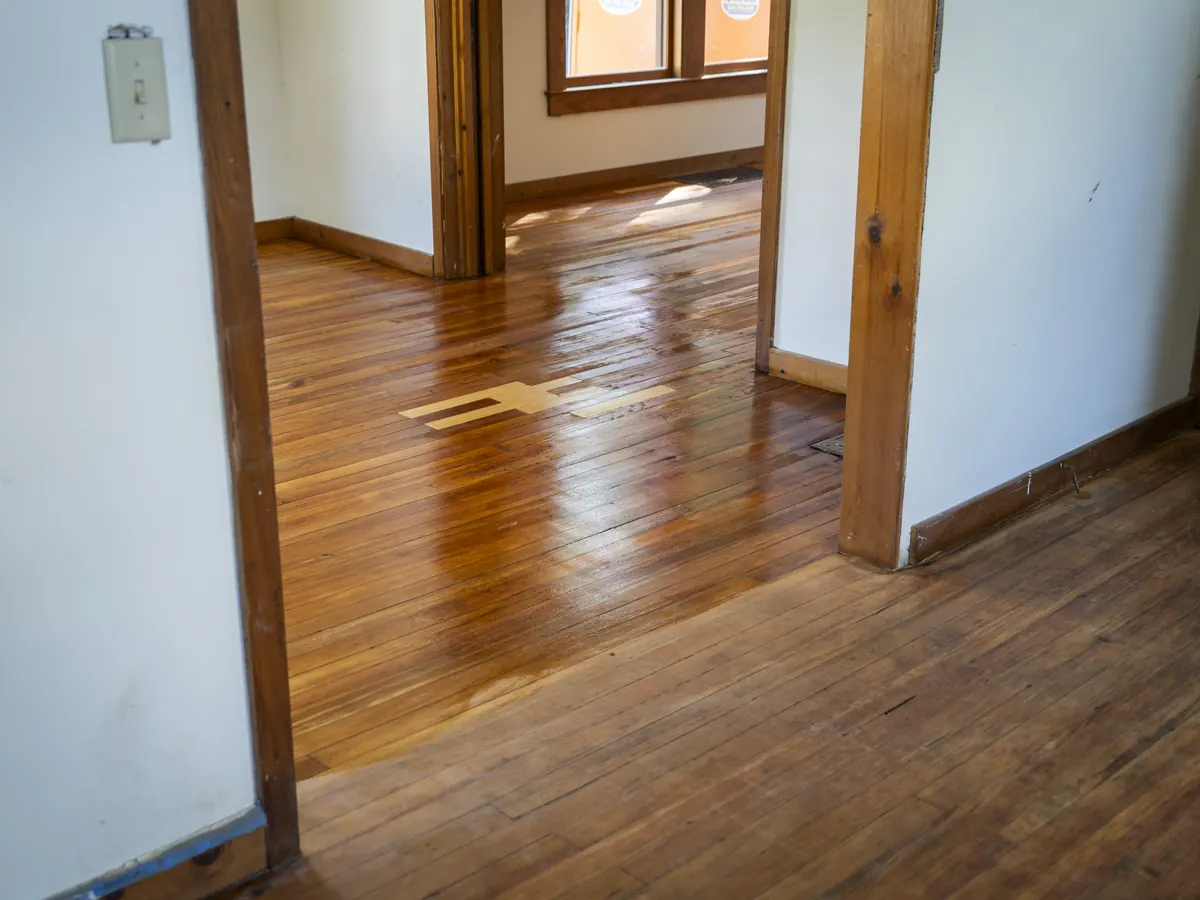
A floor that feels dry is not fully cured. Finish keeps hardening for some time after it can take foot traffic, and the waiting periods depend on the product, the number of coats, humidity, temperature and the floor itself. Rather than relying on generic numbers, use the guidance for the finish used on your job. The order is usually the same:
- Light foot traffic first: socks or clean soft soles, no shoes, no dragging anything.
- Light furniture next: lifted, not slid, with felt pads already on the legs.
- Heavy furniture later: pianos, beds, bookcases and appliances wait longer and are set down gently.
- Rugs last: a rug or pad over young finish can slow curing and leave marks.
- Pets: once the floor is cleared for everyday traffic, with nails trimmed first.
- Water: no wet mopping until the finish is cured; a damp-dry cleaning later is plenty.
Preparing your home for the work
- Empty the rooms of furniture, rugs, floor lamps and plants, and take down fragile wall art or anything on shelves that vibration could knock over.
- Plan where you will sleep, cook, park and use a bathroom during each phase.
- Make arrangements for pets and children for sanding and coating days.
- Keep heat or air conditioning on as agreed; sudden changes in temperature or humidity affect drying.
- Point out repairs, transitions to tile or carpet, and any areas that should not be sanded.
- Tell your neighbors, or your building, when noisy days are planned.
Condos, triple-deckers and shared buildings
In a condo or multi-family house, the schedule often follows the building: allowed work hours, a certificate of insurance request, elevator protection, parking or loading for equipment, and a plan for finish odor in shared hallways. A unit with one entrance makes staying home during coating harder. Sort out approvals before booking dates; the condo floor refinishing checklist covers association paperwork and logistics.
Older Boston-area floors
Older homes in Boston, Cambridge, Somerville and nearby towns can add steps to the plan:
- Fir and pine: soft wood that dents easily and is often face-nailed, so it needs a gentle sanding approach; see refinishing fir and pine floors.
- Parquet: patterned floors are sanded more carefully across mixed grain and can take longer; see parquet floor refinishing.
- Unknown old finishes and wax: may clog sandpaper and add time, or rule out a recoat.
- Pre-1978 homes: if paint near floors and trim will be disturbed, lead-safe work practices apply; see the EPA RRP program.
Aftercare in the first weeks
Put felt pads on chair and table legs, add doormats at entries, and sweep or vacuum grit regularly. Clean with a barely damp microfiber mop and a cleaner made for finished wood once the finish is cured. Avoid oil soaps, wax and shine products, which can keep a future screen and recoat from bonding. Keep indoor humidity steady to limit seasonal gaps.
Planning your quote
Start with the quote request: list the rooms and rough size, any stairs, pets, stain plans, building rules and the dates you are working around. When our email arrives, reply with a wide photo of each room, close-ups of the worst wear, and any stairs. Mention whether you hope to stay home during the work, so the plan can be built around it.
Or call (857) 837-1234.
Refinishing timelines across Greater Boston
Planning a refinish in Boston, Cambridge, Somerville, Newton, Brookline or a nearby town? Each city page covers local housing and building details, and the full town list is on service areas. Quick answers to other common questions live on the FAQ.
Frequently asked questions
How long does hardwood floor refinishing take?
A full sand and refinish is usually a multi-day job, and a screen and recoat is shorter because there is no sanding stage. The real number depends on square footage, stairs, repairs, stain, the finish product and how many coats it needs, plus indoor temperature and humidity. A written start-to-walk-on plan is the most useful thing to ask for.
Can I stay in my house while my floors are refinished?
Often, yes, if there are rooms, a bathroom and an exit you can use without crossing the work area, and if the household is comfortable with noise during sanding and odor during coating. Whole-floor or whole-house jobs, a single entrance, or odor-sensitive family members are the usual reasons people stay elsewhere for the coating days.
How long before I can put furniture back?
Not as soon as the floor feels dry. Light furniture usually comes back first and heavy pieces later, lifted into place rather than dragged, with felt pads underneath. The exact wait depends on the finish product, humidity and the floor, so follow the guidance for the finish used on your job.
When can rugs go back on a refinished floor?
Rugs are normally the last thing to return, because a rug can trap air and slow the cure underneath, and some rug pads can mark a young finish. The wait is longer than for furniture and depends on the product used and indoor conditions.
When can pets walk on refinished floors?
Keep pets off until the finish is ready for regular foot traffic, and trim nails first, since claws dig into a soft new finish. Many households keep pets in a closed room or with friends during sanding and coating and let them back on once the floor is cleared for everyday use.
Does dustless sanding mean no dust at all?
No. Vacuum-assisted sanders with HEPA filtration and good containment cut down on airborne dust a lot, which is why the word “dustless” gets used, but some fine dust still escapes, especially from edging and hand-scraping. Read it as “less dust” and still plan to cover or remove belongings in nearby rooms.
Photos are licensed stock and Creative Commons images used as examples. Photo credits