
Once the heat comes on in a Greater Boston house, many homeowners notice thin dark lines opening between their floorboards. By February some of those lines are wide enough to catch crumbs and pet hair, and by July most of them have quietly closed again. This guide explains why that happens, how to tell ordinary seasonal movement from a floor that needs attention, and what can and cannot be done about gaps when you plan a refinish.
Would rather describe it on the phone? Call (857) 837-1234.
Quick answer: are winter gaps normal?
Usually, yes. Thin, fairly even gaps that show up during the heating season and shrink again in the humid months are ordinary wood movement, not a defect, and they are often best left alone. Gaps deserve a closer look when they are much wider in one spot than elsewhere, stay open all year, come with raised or cupped board edges, or appear alongside loose, bouncy or soft areas.
Why boards shrink when the heat comes on
Wood keeps trading moisture with the air around it. When the surrounding air is dry, boards give up moisture and get narrower; when it is damp, they take moisture back and swell. The USDA Forest Service Wood Handbook describes this shrinking and swelling in detail, including the fact that boards change much more across their width than along their length. That is why the gaps run along the board edges rather than at the ends.
New England heating seasons are long, and heated indoor air in midwinter is typically much drier than summer air. Forced hot air, radiators and baseboard heat all dry a room out, and spots right next to a heat source often dry the most. In summer the opposite happens: windows are open, the air is humid, and the same boards swell back toward each other.
A few details change how big the gaps get:
- Board width. A wide plank moves more than a narrow strip, so the same season produces fewer but wider gaps on plank floors.
- How the board was cut. The Wood Handbook explains that flat-sawn lumber shrinks more across its face than quartersawn lumber, so two oak floors in the same house can behave differently.
- Species and age. Old fir and pine floors in triple-deckers and older city houses often have more open joints than oak strip, partly because many have been sanded, patched and re-nailed over the decades.
- What is underneath. Floors over unheated porches, crawl spaces or damp basements, and rooms with radiant heat, can see bigger swings than the rest of the house.
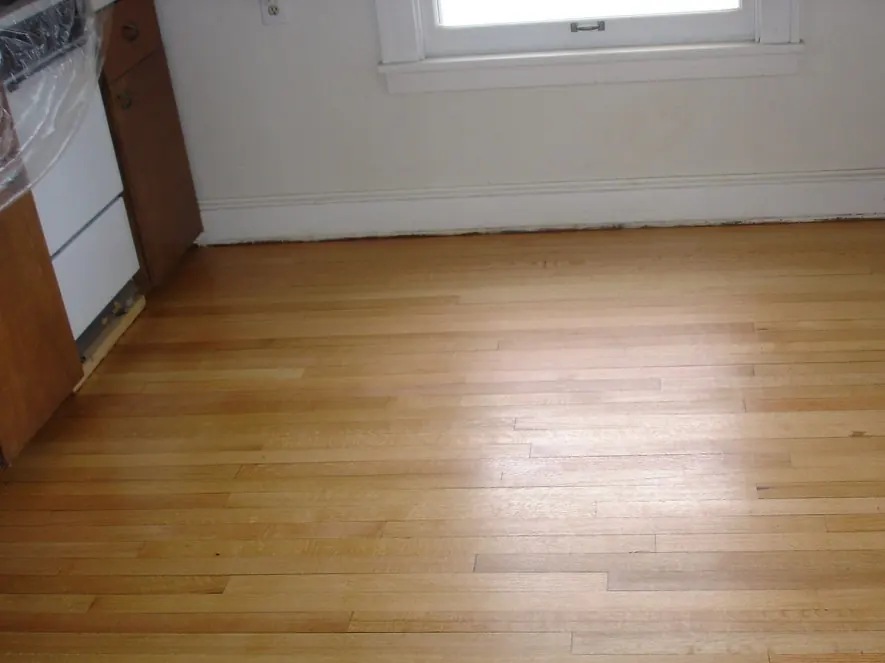
Seasonal gap, local problem, or something more?
A rough way to sort what you are seeing. When in doubt, take photos now and again in summer and compare.
- Usually seasonal
Thin and even, gone by summer
Hairline to narrow gaps spread fairly evenly across the room, appearing after the heat comes on and closing in late spring. Normal movement; most people leave these alone.
- Worth a closer look
Wider in one area
Gaps much wider by a radiator, heat register, exterior door or window, or only in one room. Often a local drying issue, but it can also point to past patches or loose boards.
- Check before refinishing
Gaps plus other symptoms
Gaps with cupped or raised edges, boards that move or squeak underfoot, soft spots, or several boards separating as a group. These can mean moisture, fastening or subfloor problems to sort out first.
Several boards moving together
Sometimes the floor does not show many small gaps but a few noticeably wide ones, with a group of boards that seem stuck together between them. Some finishes can act like glue along the board edges, so several boards shrink as one unit and the movement collects in fewer places. It is not usually dangerous, but it changes the repair approach and is worth pointing out when you ask for a quote.
Before you fill anything, wait and watch
The most common mistake with seasonal gaps is filling them at the driest point of winter. Filler in a joint that is about to close leaves the boards less room to swell in summer, and the material often cracks, crumbles or gets pushed up. A simple record helps you decide:
- Take close-up photos of the same few gaps in midwinter and again in midsummer, with a coin beside them for scale.
- Note which rooms and which heat sources are involved, and whether the gaps run the length of the room or sit in one patch.
- Check whether boards next to wide gaps rock, squeak or feel soft when you step on them.
- If gaps never close, even in August, they are more likely permanent and a better candidate for repair.
What can be done about gaps
Options, roughly from lightest to heaviest:
- Leave them and manage the air. For ordinary seasonal gaps this is often the right answer. More even humidity means less movement.
- Trowel filler during a refinish. Works for small cracks, nail holes and narrow permanent joints. In joints that open and close a lot it tends to crack out within a season or two.
- Wood slivers. Thin strips of matching wood glued into a wide, permanent gap and sanded flush. Common on older softwood and wide-board floors because the repair moves like wood instead of crumbling.
- Re-fastening or replacing boards. Loose, damaged or badly shrunken boards can be refastened or swapped for matching stock, sometimes salvaged from a closet.
- Fixing the cause first. If the gaps come with moisture symptoms, the source needs to be found before any filling or sanding. The water-damaged floors guide covers cupping, crowning and drying times.
No fill method makes a wood floor stop moving. Expect some seasonal lines to come back even after a careful repair, especially on wide or old boards.
Humidity: what helps and what to avoid
Keeping indoor humidity steadier through the heating season is the most effective way to limit gaps. A small hygrometer shows what your rooms are actually doing. Two EPA pages are useful here: the EPA guide to mold and moisture recommends keeping indoor humidity below 60 percent, ideally between 30 and 50 percent, and the EPA page on humidifier use and care advises against pushing indoor humidity above 50 percent and explains how to keep a humidifier clean.
- Run a humidifier only as much as the room needs, and clean it on the maker’s schedule.
- Watch for condensation on cold windows; heavy fogging or dampness is a sign of too much moisture, not too little.
- Keep furniture and rugs from blocking radiators and registers so one strip of floor is not baked harder than the rest.
- In summer, dehumidifying a damp basement helps the floor above stay more stable.
Refinishing during the heating season
Floors can be sanded and finished in winter. Gaps simply need to be part of the plan: sanding does not close them, dust and finish can collect in open joints, and some finishes dry more slowly in cold rooms. It helps to keep the heat at its normal setting during the work rather than turning it off. The process and timeline guide explains drying and cure stages, and the finish and sheen guide covers how finish choice affects drying time and odor. Lower sheens also show the dark lines of seasonal gaps less than a high gloss does.
Condos, multi-family houses and building heat
In many Boston, Cambridge, Somerville and Brookline buildings, residents do not control the heat. Steam radiators and central systems can leave one unit far drier than its neighbor, and gaps there can look worse than the floor deserves. A humidifier inside the unit is often the only practical lever. If you plan work in a condo, the condo refinishing checklist lists what associations usually need. Engineered floors, common in newer condos, tend to move less than solid boards but have their own limits, covered in the engineered hardwood guide.
Older softwood floors and gaps under carpet
Douglas fir and pine floors in older Greater Boston houses often have wider joints and old patches. The fir and pine floors guide explains how those boards sand and why stain needs extra care. If you just pulled up carpet and found gappy boards underneath, the hardwood under carpet guide lists what to check first, including tack strips, staples and old adhesive.
Photos that help with a gap question
Pick “Not sure” on the quote form if you are unsure whether the floor needs a repair, a refinish or nothing at all. Then answer our follow-up email and attach:
- One overall photo per room plus close-ups of the widest gaps, with a coin for scale.
- The month the photos were taken and how the room is heated.
- Whether any boards move, squeak or feel soft, and where.
- Any history of leaks, pet accidents or past repairs you know about.
- Whether the building has shared or central heat you cannot adjust.
Or call (857) 837-1234.
Related guides and areas
For the full job, read the hardwood floor refinishing page and the floor sanding page; if the finish is only dull, screen and recoat vs refinish may be enough. Town-by-town housing notes live under service areas, for example Cambridge, Somerville, Quincy, Arlington and Medford. More answers are in the FAQ.
Frequently asked questions
Why do gaps appear between my floorboards in winter?
Heated winter air is dry, so the boards lose moisture and shrink across their width. The gaps usually close again as the air gets more humid in late spring and summer.
Should I fill the gaps in my hardwood floor?
Usually not if they are thin, even and close in summer. Filler in a seasonal joint tends to crack or get pushed out. Wide gaps that stay open all year are better candidates, often with glued wood slivers rather than filler.
Does refinishing a floor close the gaps between boards?
No. Sanding and new finish do not change how wide the boards are. Permanent gaps can be repaired as part of the work, but seasonal movement continues afterward.
What indoor humidity helps reduce floor gaps?
Steadier humidity means less movement. EPA guidance suggests keeping indoor humidity below 60 percent, ideally 30 to 50 percent, and not humidifying above 50 percent. Watch for window condensation as a sign of too much moisture.
When are floor gaps a sign of a bigger problem?
When they come with cupped or raised edges, soft or bouncy spots, boards that move underfoot, or gaps in only one area near a leak or damp space. Those deserve an inspection before any refinishing.
Are gaps worse in old fir and pine floors?
Often. Older softwood floors in Greater Boston houses may have been sanded and patched many times, and wide boards move more than narrow oak strip, so their joints tend to open further in winter.
Photos are licensed stock and Creative Commons images used as examples. Photo credits