
Once a floor is sanded to bare wood, three choices decide how it will look and live for the next decade: the clear finish system, the sheen, and whether to add stain. Homeowners across Greater Boston ask the same questions about them, from Back Bay condos with strict work hours to Framingham split-levels with kids and a dog. This guide explains the tradeoffs in plain terms so you can walk into a quote conversation knowing what you want, or at least what to ask.
Prefer to talk it through? Call (857) 837-1234.
Quick answer: water-based or oil-based?
Neither is better in every house. Water-based polyurethane keeps oak near its natural, lighter shade, is ready for the next coat sooner and smells milder, which helps when you are living at home or in a building with shared hallways. Oil-modified polyurethane lends the wood a honey cast that keeps getting richer with age, takes longer between coats and needs more airing out, and many people like how it looks on older red oak. Pick based on the color you want, how long the rooms can stay closed, and who will be in the house while the floor dries.
The three finish families you will hear about
Brands and formulas vary, but most residential floor finishes fall into one of these groups. Each one can look good; they differ in color, drying time, odor and upkeep.
- Water-based polyurethane
Light, clear look
Little color shift and only slow yellowing with age. Shorter waits between coats and lower odor. Plain red oak can read slightly pink or flat under it, which a tinted first coat or stain can warm up.
- Oil-modified polyurethane
Warm amber look
Adds a honey tone at once and keeps ambering as it ages. Longer drying and cure, a stronger smell, and more ventilation needed. Often chosen to match older floors in the same house.
- Penetrating oil and hardwax oil
Low-sheen, natural feel
Soaks into the wood rather than forming a thick film. Scratches can often be spot-repaired, but the floor usually needs more frequent maintenance coats. Ask how it handles kitchens, entries and pets.
Within the water-based group, products range from basic one-part finishes to two-part (catalyzed) versions sold for heavier wear. If durability matters most, ask which grade is planned rather than just “water-based or oil.”
How each finish changes the color of oak
Most Boston-area floors are red oak strip, with white oak, maple, fir and pine showing up in particular houses and rooms. The clear coat itself shifts color more than many people expect:
- Red oak, water-based: stays pale with a faint pink or salmon cast in the grain. Some people love the clean look; others find it too cool next to older trim.
- Red oak, oil-modified: turns a golden, honey tone right away and gets warmer over time. This is the look many people remember from older Boston-area houses.
- White oak: reads more neutral brown or tan and tends to take gray and brown stains more evenly than red oak.
- Maple, fir and pine: clear finish usually looks good; stain is where these woods get tricky (more below).
- Matching an existing floor: if a refinished room must sit next to an untouched hallway, mention it. An older oil finish has ambered for years, and a fresh clear water-based coat beside it can look noticeably lighter.
Drying time, odor and staying home
Finish choice changes how long rooms stay closed. Water-based systems often allow more than one coat in a day, while oil-modified coats usually need much longer between them, so the same job can take extra days. Both still need a cure period before rugs go down and heavy furniture slides back. The process and timeline guide covers what each stage of the project looks like and when rooms reopen.
Odor matters most in condos, multi-family houses and homes with kids, older relatives or pets. Floor finishes give off volatile organic compounds (VOCs) as they dry, and the EPA overview of VOCs and indoor air explains why fresh air helps while they do. Lower-odor products are not odor-free, so plan for ventilation and closed doors either way. If you live in a building, check whether the condo association has rules about finish types, hallway odors or work hours; the condo refinishing checklist lists what boards usually ask about.
Choosing a sheen
Sheen is how much light the finish reflects. It is a looks choice, but it also changes how much wear shows:
- Matte or extra-matte: closest to bare wood. Hides dust, pet-claw scuffs and small dents best. Popular in newer renovations.
- Satin: a soft glow without a mirror effect. The most common middle ground for living spaces and bedrooms.
- Semi-gloss and gloss: crisp and traditional, but every scratch, footprint and slight dip in an old floor shows in raking light. Older floors with uneven boards often look smoother in a lower sheen.
Sheen names are not standard between brands, so look at a finished sample board or photos of the exact product if the difference matters to you.
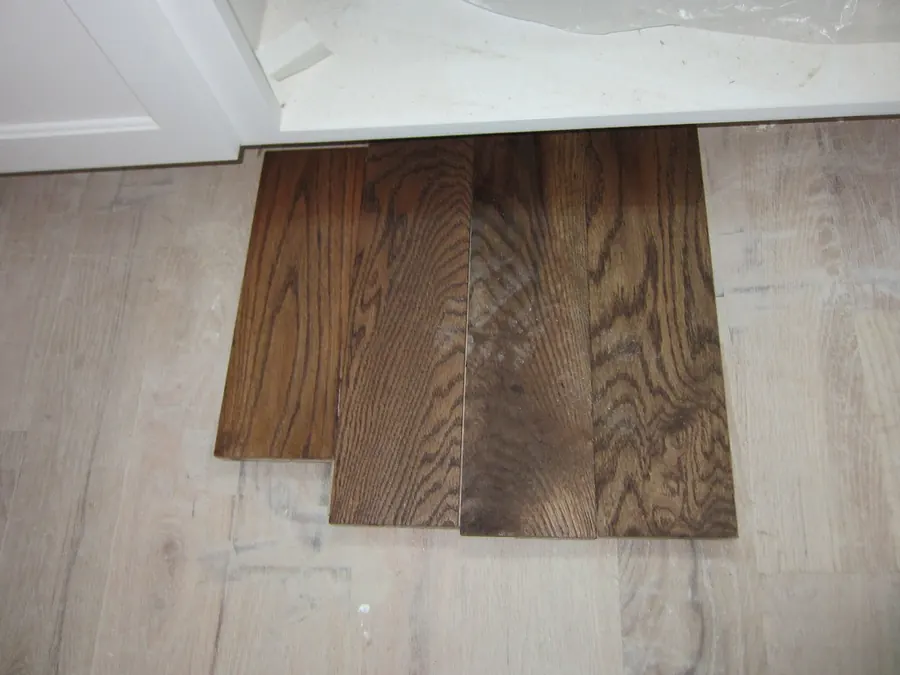
Picking a stain color without regret
Stain is optional. A natural floor under a clear finish is simpler, a little faster, and easier to touch up later. If you do want a new color, a few habits prevent most surprises:
- Test on your own sanded floor. One stain can read three ways on red oak, white oak and maple, and shifts again after the clear coats go on. Small brochures and showroom boards are only a starting point.
- Look in daylight and at night. North-facing rooms, south-facing bays and warm lamps can make one sample look like three different colors.
- Check samples next to fixed things. Trim, stair rails, cabinets and the floor in rooms you are not refinishing all stay put.
- Know what dark and gray colors show. Very dark floors make dust, pet hair and light scratches more visible. Gray and whitewash tones depend heavily on species; on red oak, the natural pink in the grain can fight a gray stain.
- Allow drying time. Stain must dry before the first clear coat, which adds time to the schedule.
Maple, fir and pine absorb stain unevenly and can blotch. If your floor is softwood, read the fir and pine floors guide before settling on a dark shade; clear or barely tinted is often the safer route on softwood. Herringbone and other patterned floors expose grain in several directions, so the parquet guide is worth a look too.
Kids, pets, kitchens and rentals
Match the finish to how the floor will be used. Busy kitchens, back entries and homes with large dogs benefit from a durable film finish and a lower sheen that hides scratches. Penetrating oil floors can be easier to spot-repair but usually need maintenance coats more often. In rentals and units turning over between tenants, a durable clear finish in satin or matte is a practical default, and it makes a future screen and recoat simpler than a custom stain color would. Preparing to list? The refinishing before selling guide covers why neutral choices photograph well.
Can you change the finish later?
Recoating only works when the new coat bonds to the old one. A worn polyurethane floor can often be screened and recoated, but switching between finish families, or recoating over an oil or wax that was never meant to take polyurethane, usually means a full sand back to bare wood. A new stain color always means a full sand. Waxes, oil soaps and shine restorers used for cleaning can also keep a recoat from sticking, which is why the FAQ recommends a plain cleaner made for finished wood. Engineered floors add another limit: the engineered hardwood guide explains how the wear layer decides whether sanding is possible at all.
What to send with your quote request
Use the quote form and mention your finish and color ideas in the notes, even if they are rough. After you submit, reply to the follow-up email with:
- One doorway shot per room, taken in daylight if you can.
- A close-up of the current color next to trim or any floor you are keeping as is.
- Photos or product names of colors or floors you like, if you have them.
- Whether you plan to stay home during the work, and any condo rules about odors or hours.
- Pets, kids and which rooms get the heaviest traffic.
Or call (857) 837-1234.
Related guides and areas
The hardwood floor refinishing page explains what a full refinish includes, and floor sanding covers the sanding stage before any finish goes on. Local notes for older houses and condos are on the service areas pages, including Boston, Cambridge, Brookline, Newton and Somerville.
Frequently asked questions
Is water-based or oil-based polyurethane better for hardwood floors?
Neither wins everywhere. Water-based keeps oak lighter, dries faster and smells less. Oil-modified adds an amber tone that grows warmer with age and takes longer to dry. Choose by the color you want, how long rooms can stay closed and who is home during the work.
Does oil-based polyurethane turn yellow?
Yes, oil-modified finishes add an amber tone right away and keep warming over the years. That is part of their appeal on older oak. Water-based finishes change color much less, which suits lighter or gray looks.
What sheen hides scratches best on hardwood floors?
Matte and satin hide scuffs, dust and small dents better than semi-gloss or gloss. Higher sheens look crisp but show every scratch and any unevenness in older boards.
Can I stain my floor gray or very dark?
Usually, but test first on your own sanded boards. Dark colors show dust and light scratches more, and gray tones depend heavily on species; red oak’s natural pink can fight a gray stain. Softwoods and maple may blotch.
Can I switch from an oil finish to a water-based finish without sanding?
Usually not. Changing finish families, adding stain or changing color generally means sanding back to bare wood. A screen and recoat only works when the new coat can bond to the existing finish.
Which finish is easiest to live with during the project?
Water-based systems usually have shorter waits between coats and lower odor, so they are often easier when you are staying home or live in a condo building. Any finish still needs ventilation and a cure period before rugs and heavy furniture go back.
Photos are licensed stock and Creative Commons images used as examples. Photo credits