
Engineered hardwood is everywhere in Greater Boston condos, renovated triple-decker units and newer additions, and it is often the floor people are least sure about. It looks like solid wood, but under the top layer it is plywood or fiberboard. Whether it can be sanded and refinished comes down to how thick that top layer is, how the planks were installed, and what kind of factory finish is on them. This guide walks through how to check, what the realistic options are, and when replacement makes more sense than sanding.
Prefer to talk it through? Call (857) 837-1234.
Quick answer: can engineered hardwood be refinished?
Often, but not always. An engineered plank is a layer of real hardwood (the wear layer) glued on top of a core. If the wear layer is thick enough, it can be sanded and refinished much like solid wood, though fewer times. If it is very thin, sanding can cut through to the core, and the better options are a screen and recoat of the existing finish or replacing the worn planks. Planks that have swollen, separated or come loose from water are replaced either way.
Wear layer thickness: the number that decides it
Manufacturers list the wear layer in millimeters on the box or spec sheet. As a rough guide (product quality, flatness and past sanding all matter too):
- Thin
Under about 2 mm
Common on budget and many click-together floors. Usually too thin to sand safely; a recoat or plank replacement is the realistic route.
- Medium
About 2 to 3 mm
May allow one careful light sanding with fine passes, if the floor is flat and has not been sanded before. A test area tells more than the spec sheet.
- Thick
About 4 mm and up
Behaves more like solid wood and can often be sanded more than once over its life, provided the floor is flat and well attached.
A floor sander also removes some wood just to get through the old finish and flatten small height differences, so the usable amount is less than the full layer.
How to check what you have
- Look at a cut edge. Lift a floor vent register, or look at the end of a plank at a threshold, stair nosing or transition strip. Engineered flooring shows a distinct top layer over plywood plies or a fiberboard core; solid wood is the same species all the way through.
- Find the paperwork. Leftover boxes in a basement or closet, a condo renovation file, or the product name from a previous owner or seller disclosure usually list the wear layer thickness.
- Check how it is installed. Press near a wall and listen: a hollow sound and slight give can mean a floating floor, often click-together. Glued-down and nailed-down engineered floors feel solid. Floating floors can be harder to sand evenly, because planks that move or have tight joints take the sander unevenly.
- Look at the plank edges. Many prefinished engineered floors have small beveled edges along each plank. Sanding flat leaves those grooves holding old finish, which can show as dark lines unless they are addressed.
- Think about past work. A floor that was already sanded once may have little left even if it started with a decent wear layer.
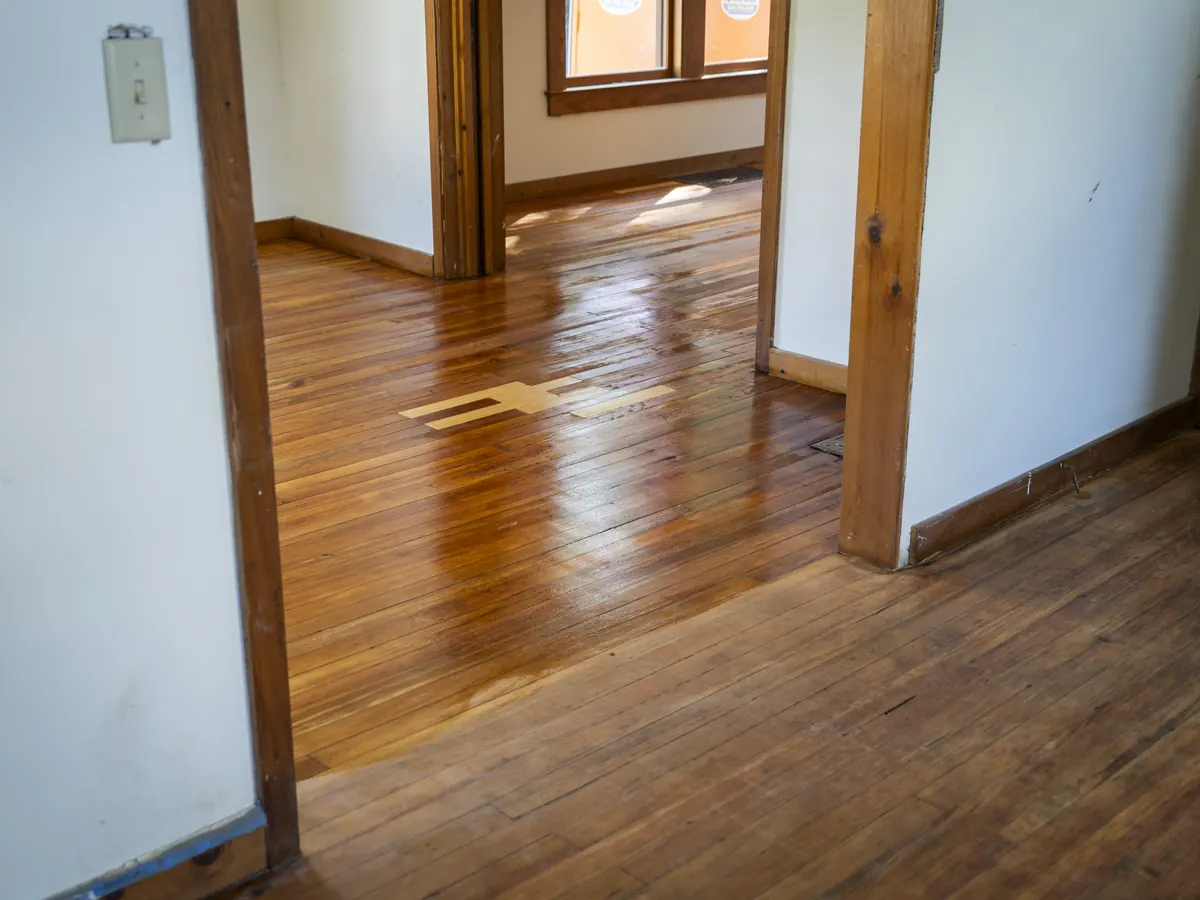
Your options, from lightest to heaviest
- Clean and maintain: if the floor is dull but the finish is intact, a proper cleaning with a cleaner made for the finish type can be enough.
- Screen and recoat: the existing finish is abraded and a fresh coat goes on, without cutting into the wood. It suits worn-looking but undamaged floors, and it uses none of the wear layer. Many factory finishes are very hard (often containing aluminum oxide), so getting a new coat to bond takes the right preparation and a compatible finish; a small adhesion test is a sensible first step. The screen and recoat vs refinish guide has home checks that help tell which you need.
- Full sand and refinish: for floors with a thick enough wear layer and scratches, gray worn areas or a color you want to change. Sanding is done with finer, lighter passes than on solid oak strip, with care at seams and edges. See floor sanding and hardwood floor refinishing for what the work involves.
- Replace planks or the floor: when the wear layer is worn through, planks are swollen or delaminated, or the floor is a thin click product with deep damage. Individual planks can sometimes be swapped if matching stock exists; otherwise a section or the whole floor is replaced.
Water damage on engineered floors
Engineered planks react to water differently from solid boards. A surface stain on a thick wear layer may sand out, but if water has reached the core, it can swell at the edges, lift or separate from the top layer, and sanding will not fix that. Leaks from a dishwasher, a radiator or a unit upstairs are common causes in Boston-area condos. The guide to water-damaged and pet-stained floors covers drying out the floor first and telling surface marks from deeper damage.
Condos and multi-family buildings
Engineered flooring is common in condo conversions because it can go over concrete and with sound underlayment. If you are in a condo, check the association rules before planning work: many buildings set rules on work hours, notice and certificates of insurance, and some have requirements about flooring and sound transmission that matter if any planks are replaced. The condo floor refinishing checklist lists what to ask. If the engineered floor was laid over older flooring in a pre-1980s building, avoid tearing up the layers underneath until they are tested; the EPA asbestos guidance explains why old vinyl tile and black adhesive should be tested before they are disturbed.
Engineered floors next to solid wood
Many older Boston-area homes now have both: original oak or fir and pine in the main rooms, and engineered flooring in a renovated kitchen, addition or finished basement. They can often be refinished in the same project, but they may not take stain identically, and the engineered area may need a lighter approach. Matching sheen and color across the transition is easier when both are finished at the same time with test samples on each.
Getting a quote for an engineered floor
Start a request on the quote form and pick “Not sure” if you do not know whether it should be recoated, sanded or replaced. In the notes, include the product name or wear layer thickness if you have it, whether the floor floats or is glued or nailed, roughly when it was installed, whether it has been sanded before, and any water history. Then answer the confirmation email with photos: the whole room from the doorway, close-ups of worn areas, and a clear shot of a plank edge at a vent or threshold.
Or call (857) 837-1234.
Related guides and areas
The FAQ has short answers on timing, odor and staying home during the work, and the process page explains each step. Engineered floors turn up across the service area, from condo units in Boston, Cambridge and Brookline to newer construction in Waltham and Framingham.
Frequently asked questions
How many times can engineered hardwood be refinished?
It depends on the wear layer. Floors with a very thin layer may not be sandable at all, a medium layer may allow one light sanding, and thick layers can often be sanded more than once. Each full sanding removes some wood, so past sanding counts too.
How do I find out how thick my wear layer is?
Look at a cut plank edge by lifting a floor vent register or checking a threshold or stair nosing, and look for leftover boxes or the product name. The top hardwood layer is visible as a separate band above the core.
Can I recoat engineered flooring instead of sanding it?
Often, if the finish is worn but the wood is not damaged. A screen and recoat abrades the existing finish and adds a new coat without using up the wear layer. Hard factory finishes need careful preparation and an adhesion test so the new coat bonds.
Can click-together (floating) engineered floors be sanded?
Some can, if the wear layer is thick enough and the planks are flat and tight. Many floating products have thin wear layers and beveled edges, so a recoat or plank replacement is more often the practical choice.
Can engineered hardwood be stained a different color?
If it has a thick enough wear layer to sand back to bare wood, yes, and samples on the actual floor are the way to choose. If it can only be recoated, the color stays essentially the same.
Is it better to refinish or replace engineered hardwood?
Refinishing or recoating usually makes sense when the planks are flat, well attached and have wood to spare. Replacement makes more sense when the wear layer is worn through, planks are swollen or separating from water, or the damage covers most of the floor.
Photos are licensed stock and Creative Commons images used as examples. Photo credits